
CRYSTAL GREGORY: THE WEAVE OF MOVEMENT
| by Maria Rosaria Roseo |
The research of Crystal Gregory, artist born in 1983 and currently an Associate Professor at the School of Art and Visual Studies at the University of Kentucky, is based on the act of weaving as a gesture of construction and spatial thinking. From the very beginning, her practice has developed at the intersection of textile and architecture, between the fragile and the solid, exploring how materials and structures can redefine the ideas of space, movement, and relationship.
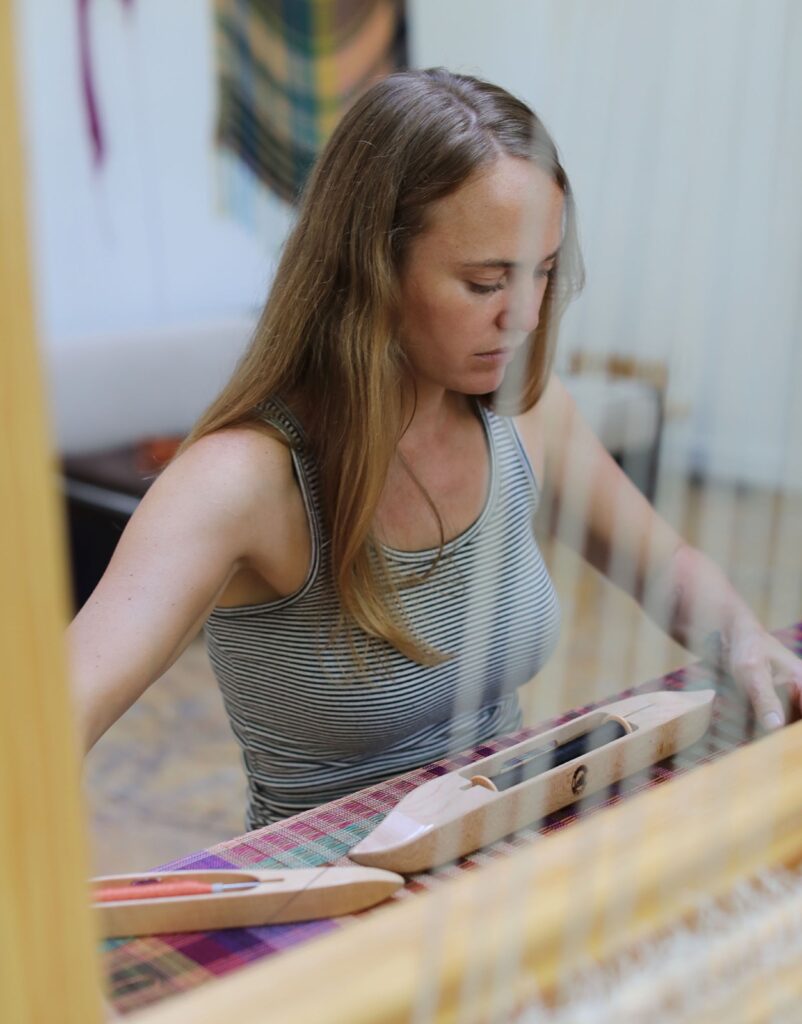
Gregory approaches her art through her hands and body. The act of weaving becomes a means for her to understand and engage with the material world: a long process, made of repetition and care, which allows her to deeply know the properties of materials and to build a language of interlacing, tension, and reconsideration. As she has explained in the past, the artist considers every material a tool to investigate the human condition, emphasizing how weaving, with its cyclical and linear nature, requires attention and continuity to evolve.
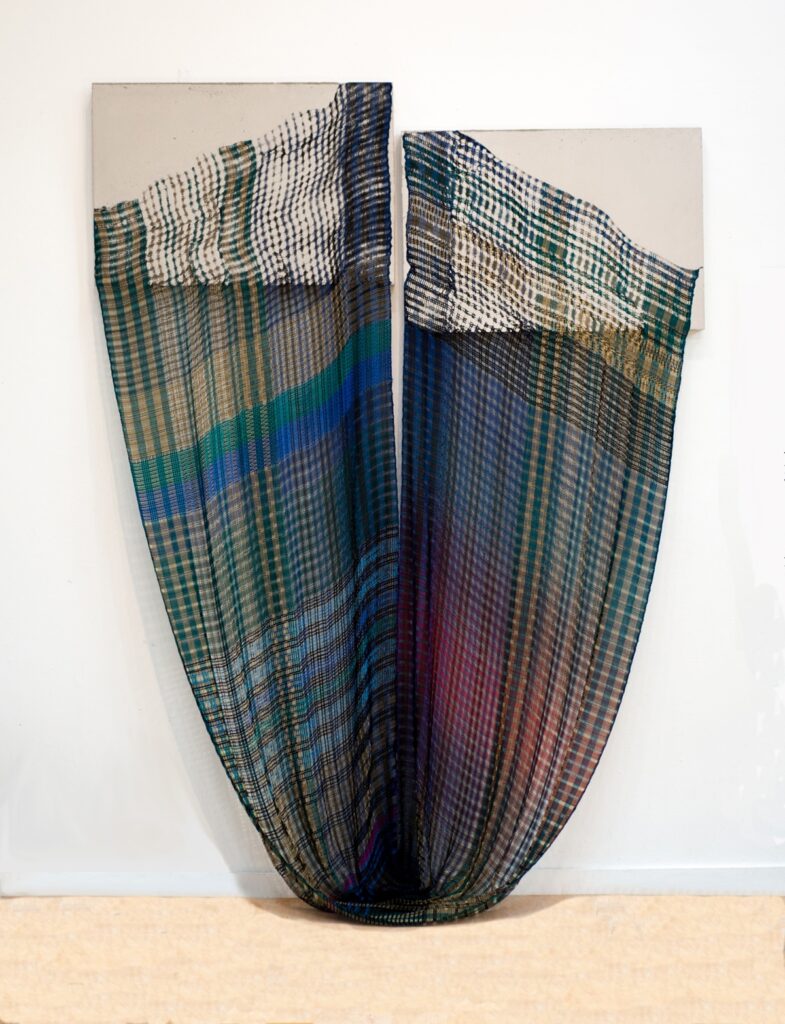

The relationship between fabric and architecture, a central concept of her work, has its roots in the thinking of Anni Albers: if architecture is fixed and permanent, fabric is mobile and foldable. Both define space, create shelter, and delimit privacy, but fabric has the advantage of flexibility. Gregory defines herself as a builder: in the warp and weft lines, she recognizes the same logic that organizes architecture, a “soft structural thought” in which stability and change coexist.
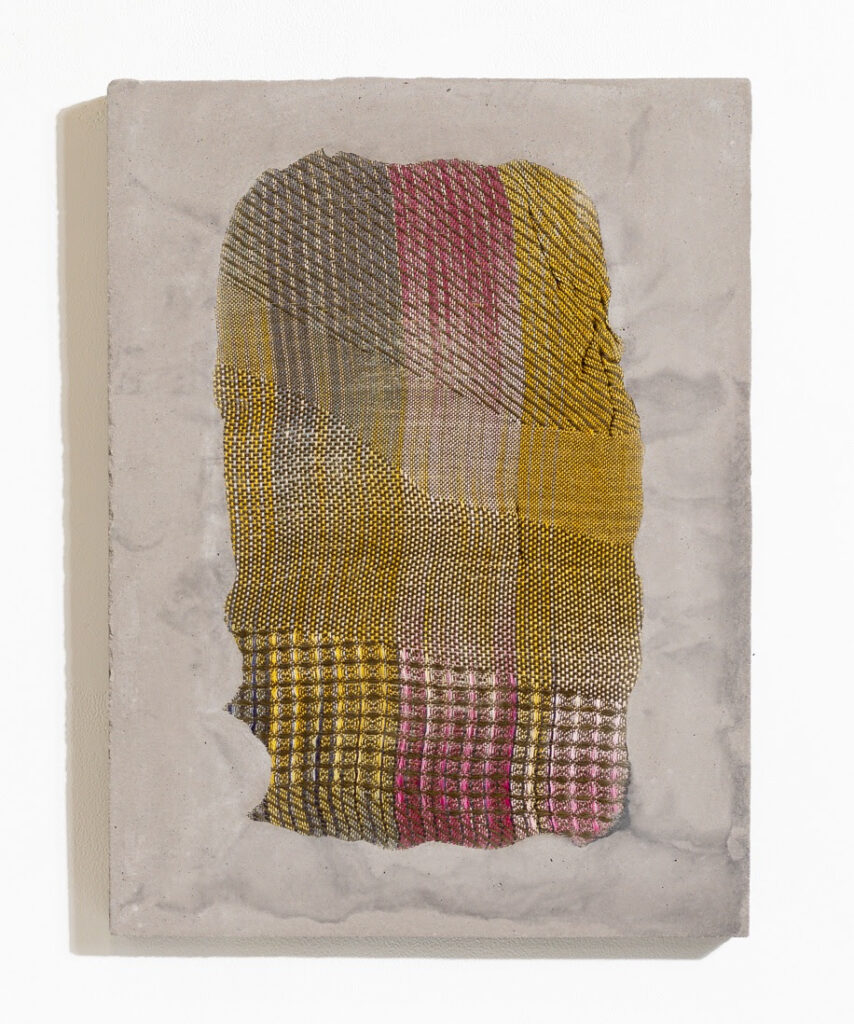
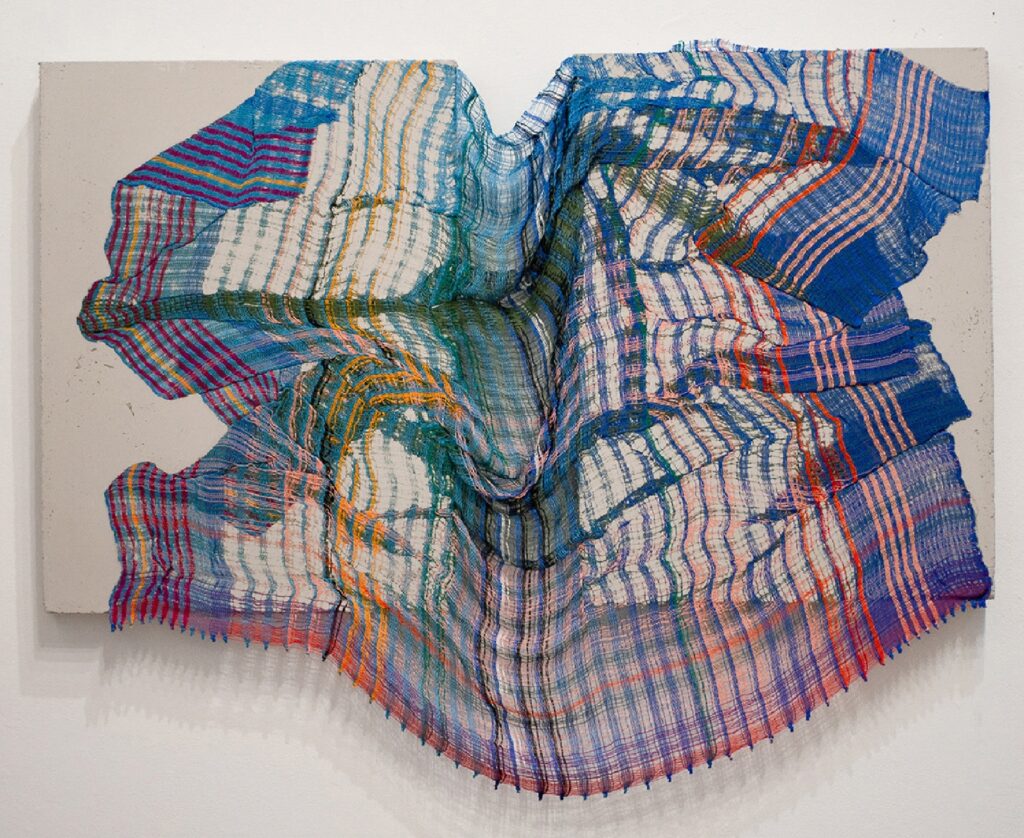
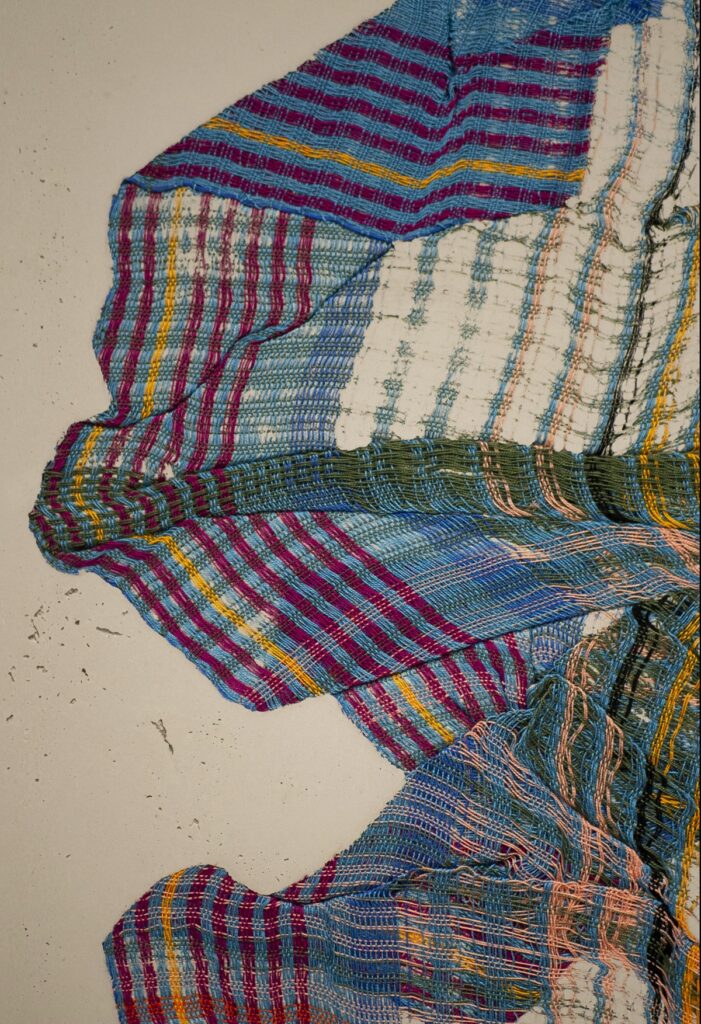
This dialectic between soft and solid is emblematic in works where fabric engages with materials like concrete and metal. In the series of woven fabrics cast in concrete, Gregory explores the contrast between two seemingly opposite materials: one flexible, the other rigid. The act of weaving is immobilized in concrete, yet at the same time the fabric retains the memory of its lightness and movement. It is a dialogue of forces reflecting on fragility and strength, adaptability and resilience, challenging social and gender categories, and reversing the traditional hierarchy between “soft” and “hard.”
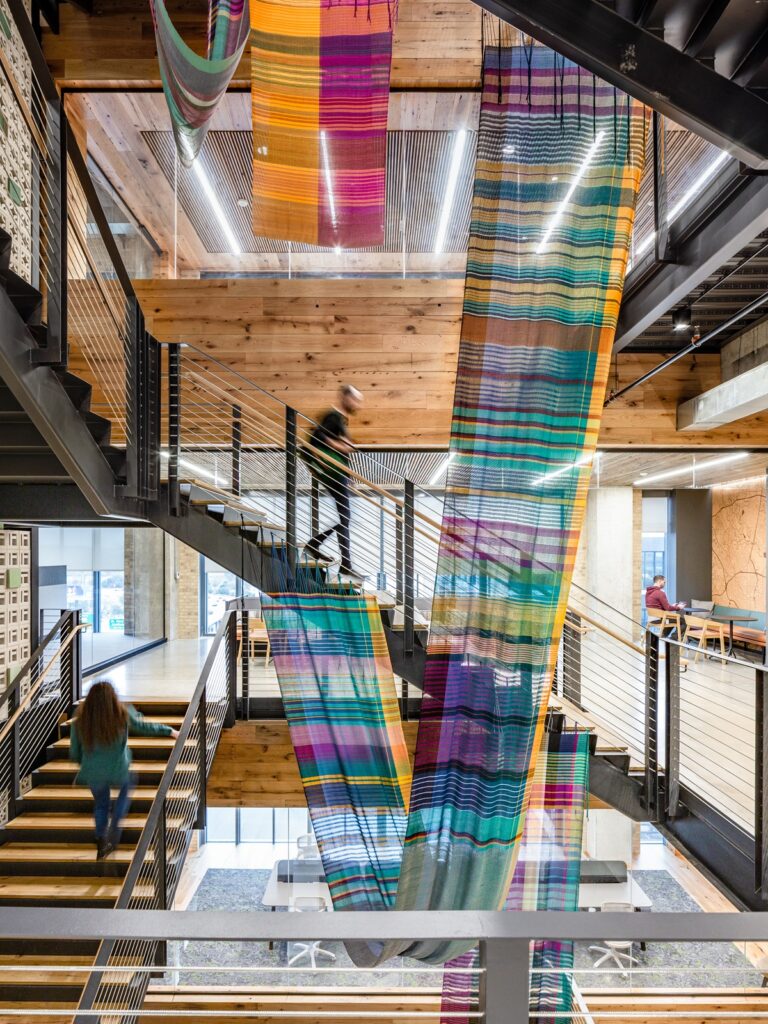
The body and movement have naturally become an extension of her research. With The Event of the Thread, a performative installation developed in collaboration with the dance company The Moving Architects, Gregory explored the relationships between fabric, concrete, scaffolding, and the human body. The title, borrowed from a concept by Anni Albers, suggests the possibility of continuously restructuring connections and relationships, just like in a weave where threads move without ever stopping. The work, in constant transformation, becomes living body, an interweaving of gestures and materials that support each other in a precarious yet vital balance.
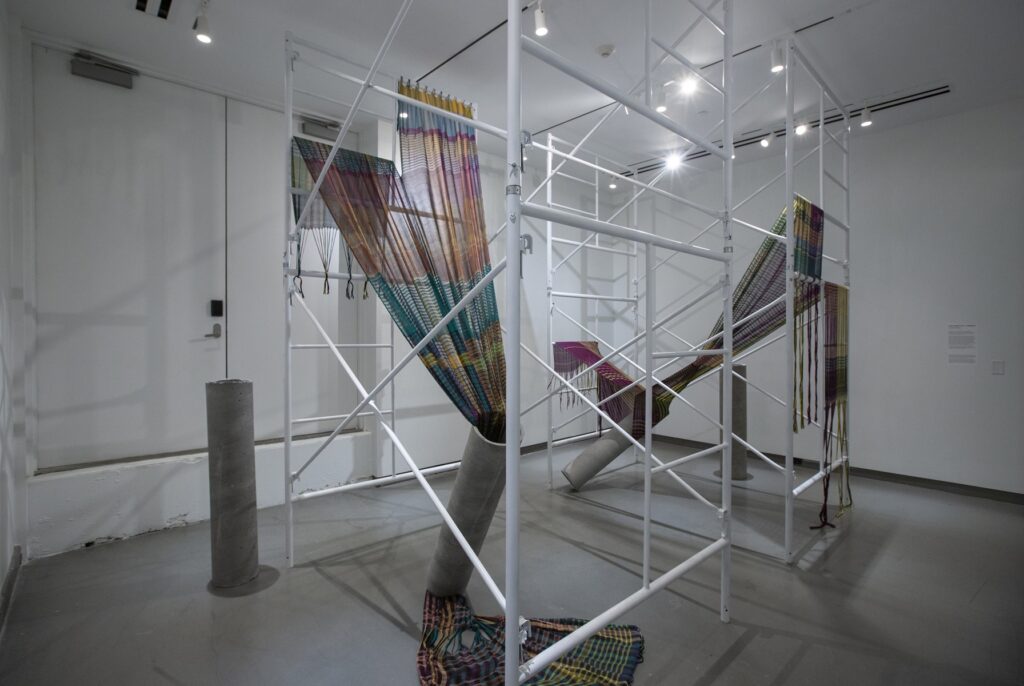

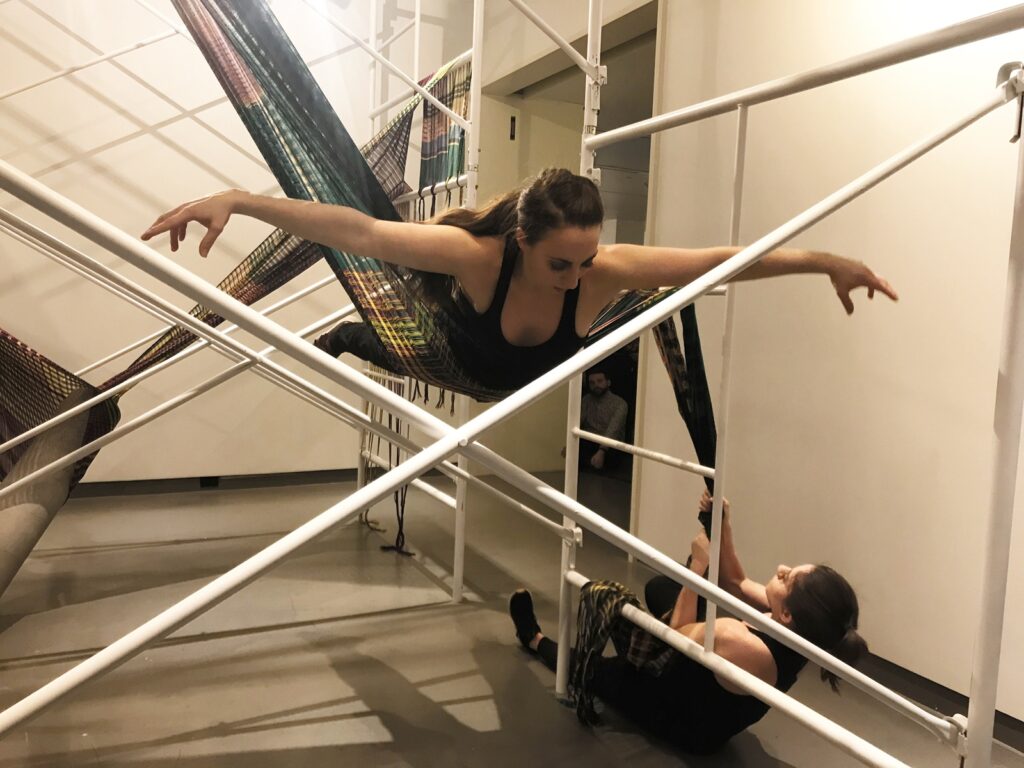
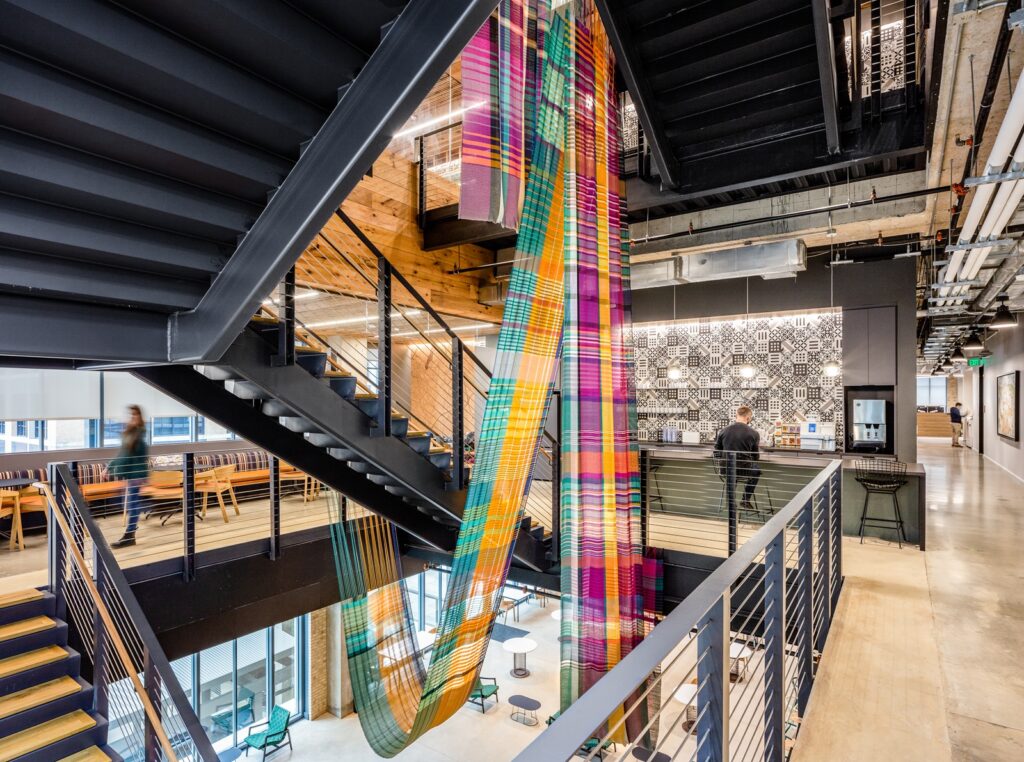
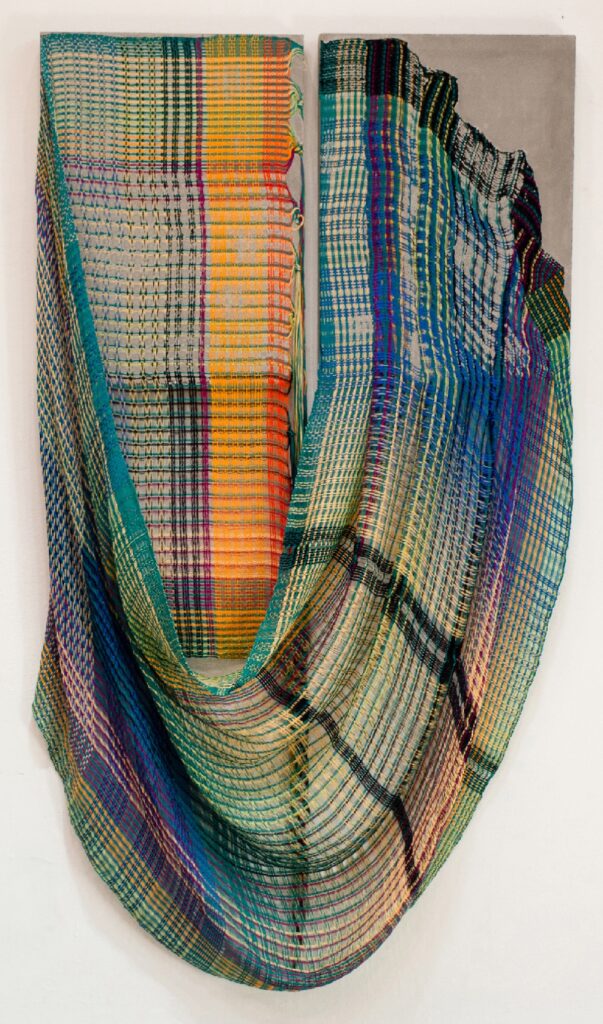
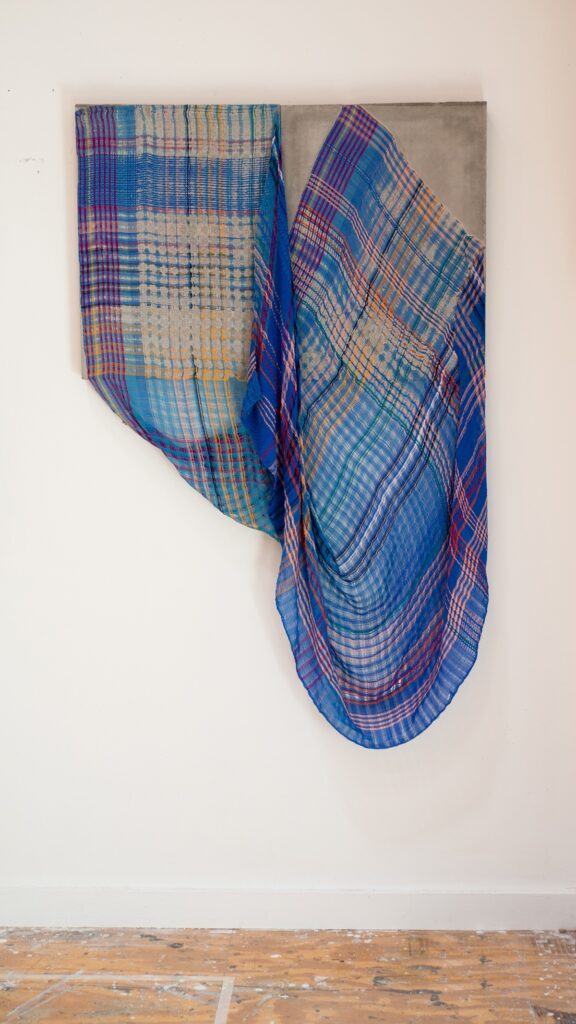
In her most recent exhibition, The Ocean Never Gives Up (SoapBox Arts, 2025), Gregory further develops this dialogue between textile and architecture “through movement and landscape.” The works on display, made in naturally dyed silk and partly embedded in concrete or supported by metal structures, oscillate between fixity and fluidity, between construction and surrender. Some works immobilize the weave in the hardness of concrete, while others unfold in space, allowing the threads to drape freely, held only by thin steel frames. The interlacing becomes landscape, material breathing, reflection on the body, and memory of gesture.
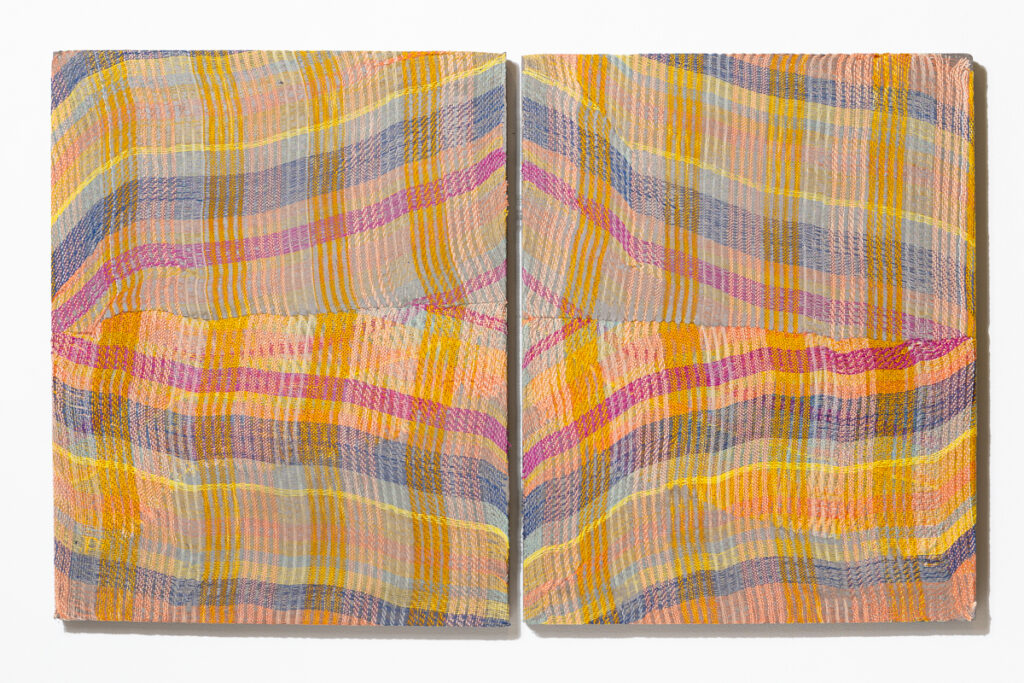
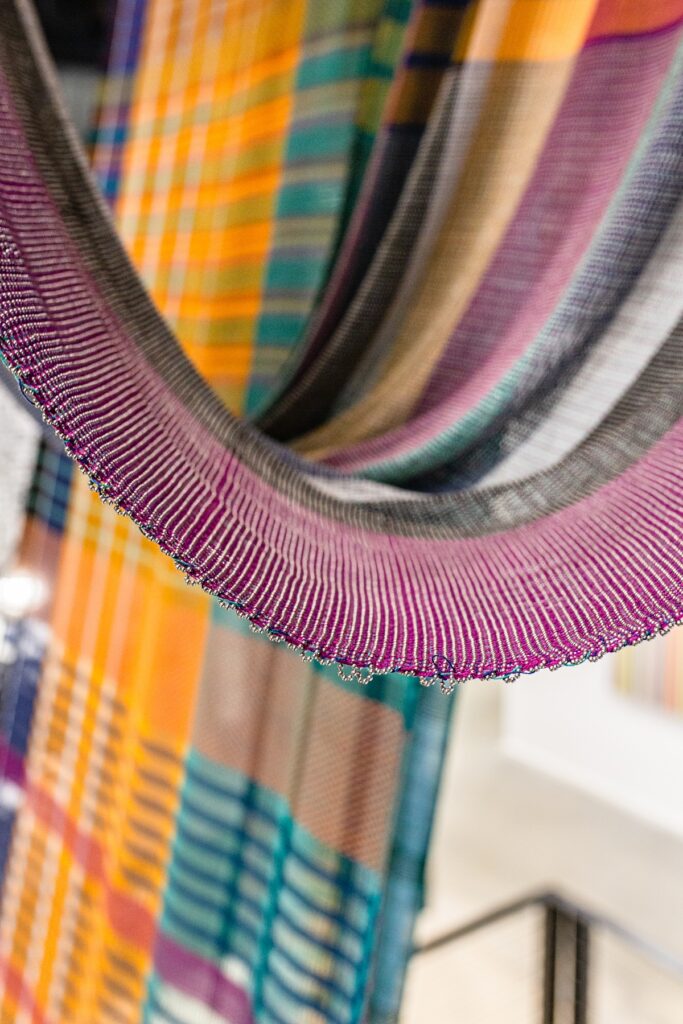
The use of natural dyes introduces a strong geographical and environmental dimension. Gregory collects pigments directly from her dye garden, transforming each color into a trace of place and time. Each hue is the unique result of climate, soil, and seasonality — a kind of “hypergeography” that brings the landscape into the work, making color a form of ecological memory. Her work does not simply represent nature; it becomes a direct emanation of it: earth, light, and matter intertwining in a single creative flow.
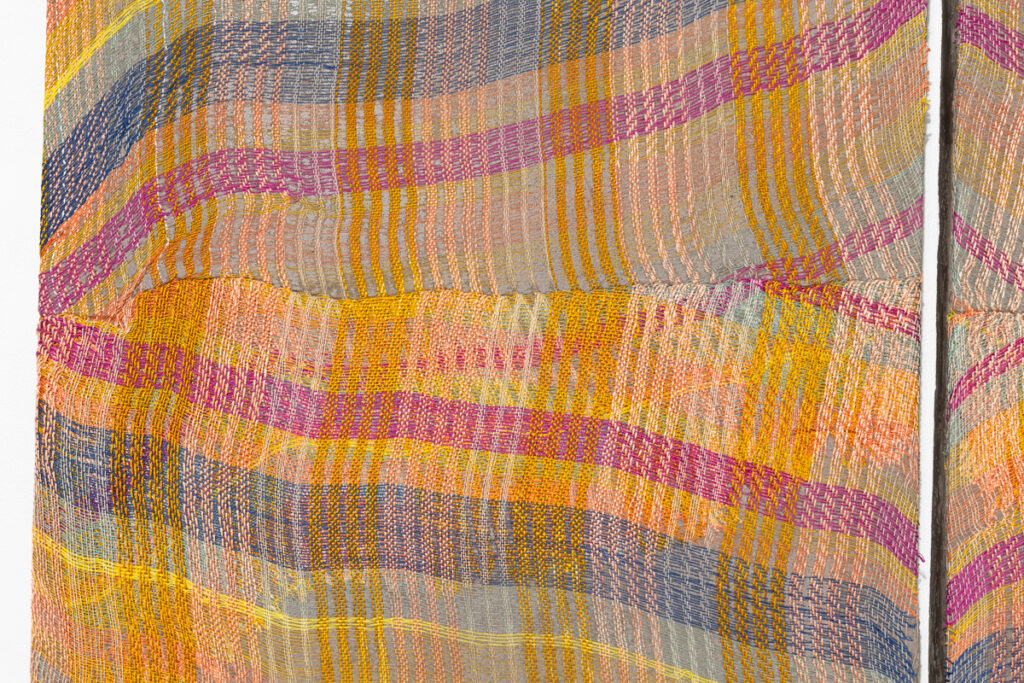
In her most recent works, construction continues to be for Gregory both a gesture and a method. Layered structures across three axes — warp, weft, and depth — generate fabrics that expand into space, opening and closing surfaces like flexible architecture. Weaving remains a cyclical discipline: each step builds on the previous and prepares the next in a continuous act of return and transformation. At this stage of her practice, the artist collaborates with multiple disciplines — chemistry, botany, and dance — to explore new languages of matter. Investigations into color with Anne-Frances Miller and Shari Dutton reflect the territory of Kentucky, while future projects involve the use of ductile metals such as tin and aluminum to interact with the flexibility of woven fabric.
Throughout her work, Crystal Gregory approaches the textile as a living organism in constant movement. Whether a silk thread or a block of concrete, the material is always a field of forces, a metaphor for the relationship between body and environment, between being and building. As the artist herself summarizes: “I am always learning and see my practice as an object of labor in a constant state of becoming, something that is pliable and alive”.
The Artist in Focus: A Conversation with Crystal Gregory
In the exhibition text, you mention a dialogue between textile and architecture “through movement and landscape.” How is this idea concretely expressed in the works on display in “The Ocean Never Gives Up”?
My current exhibition, The Ocean Never Gives Up, is made of handwoven textiles that are either cast in concrete or stretched on steel frames all made within a palette of natural dyes harvested from my dye garden. These materials reflect a cadence between permanence and motion, fixity and relocation. In some works the textile is cast into a slab of concrete stilling its movement, yet through placing these materials in conversation the fabric is allowed to express its natural state of softness and pliability. Other works are made of layered weavings that when taken off the loom unfold into a maze of threads stretching tautly around a steel frame ultimately allowing the center to drape and be released from its own tension.
I define my chosen materials to be the edges or the parameters of movement and the body – as a thread weaves its way through the network of a warp, so does a body perform a guided choreography through an architectural space. The built landscape shapes the movements of its residents as each individual finds their way to their destination – paths are carved, imprinted, and repeated. The gallery work allows me to study the ephemerality of movement in unmoving material explorations that echo characteristics of motion.
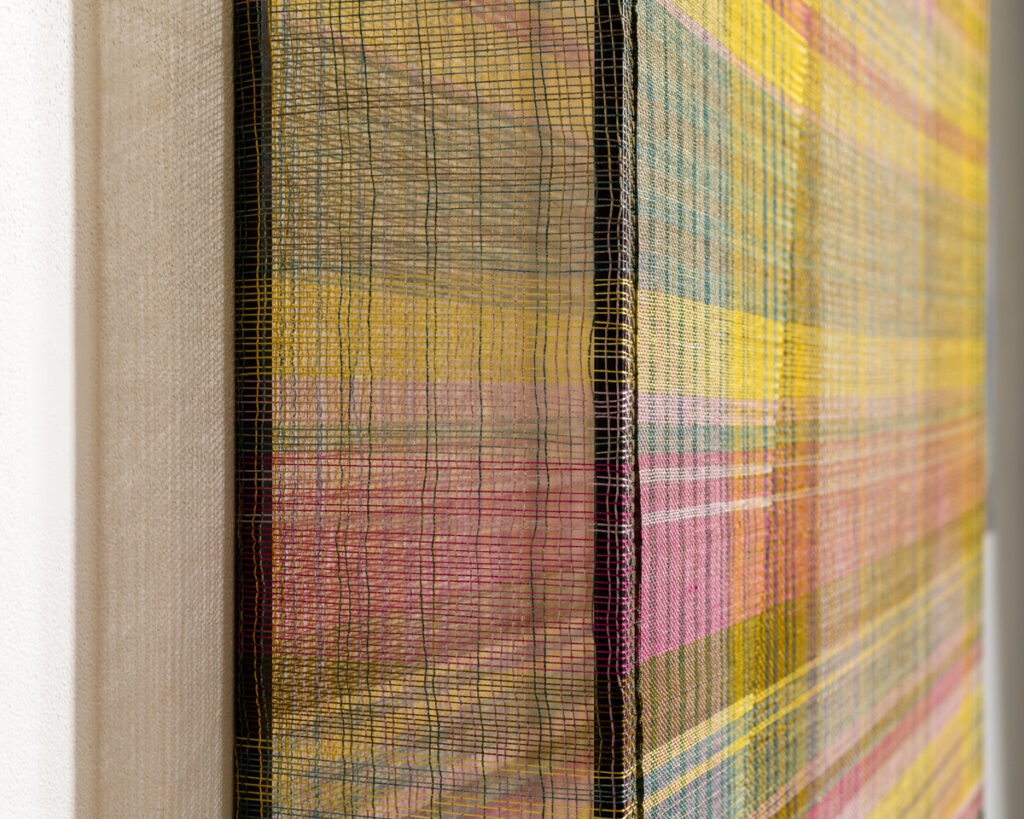
The use of natural dye and silk as primary materials introduces a strong geographic and environmental dimension. What role does the place — and your dye garden — play in determining the palette and processes in your most recent research?
My research in natural dye is very much concerned with understanding place; specifically the place I am currently living in Lexington Kentucky, USA. If the architectural ideas that I engage with are fixed and permanent then the opposite would be a textile having the ability to fold and be carried to new places. In natural dyeing, the garden is a direct link to its environment. A plant’s color is a visual record of the specific place and time it grew, changing significantly based on the environmental conditions of that year. Because of this unique dependency on the geography and time—a sort of hypergeography—the exact color can never be repeated but can be carried through the life of the dyed textile.
Some works combine naturally dyed fabrics with concrete or metal structures, creating a contrast between soft and rigid materials. What interests you today about this relationship between fragility and structure, between flexibility and fixity?
A cloth composes a tensile strength. As an individual, each thread is prone to stress, strain and breakage, but as a collective the burden of tension becomes bearable. It interlaces with its neighboring thread to create a greater sum of parts. And if a fold suggests an elastic surface, a tensile quality that yields to pressure, this is not a weakness; for an object that gives in is actually stronger than one that resists. A fold can permit the opportunity to be oneself in a new way, a resiliency without changing one’s elemental properties.
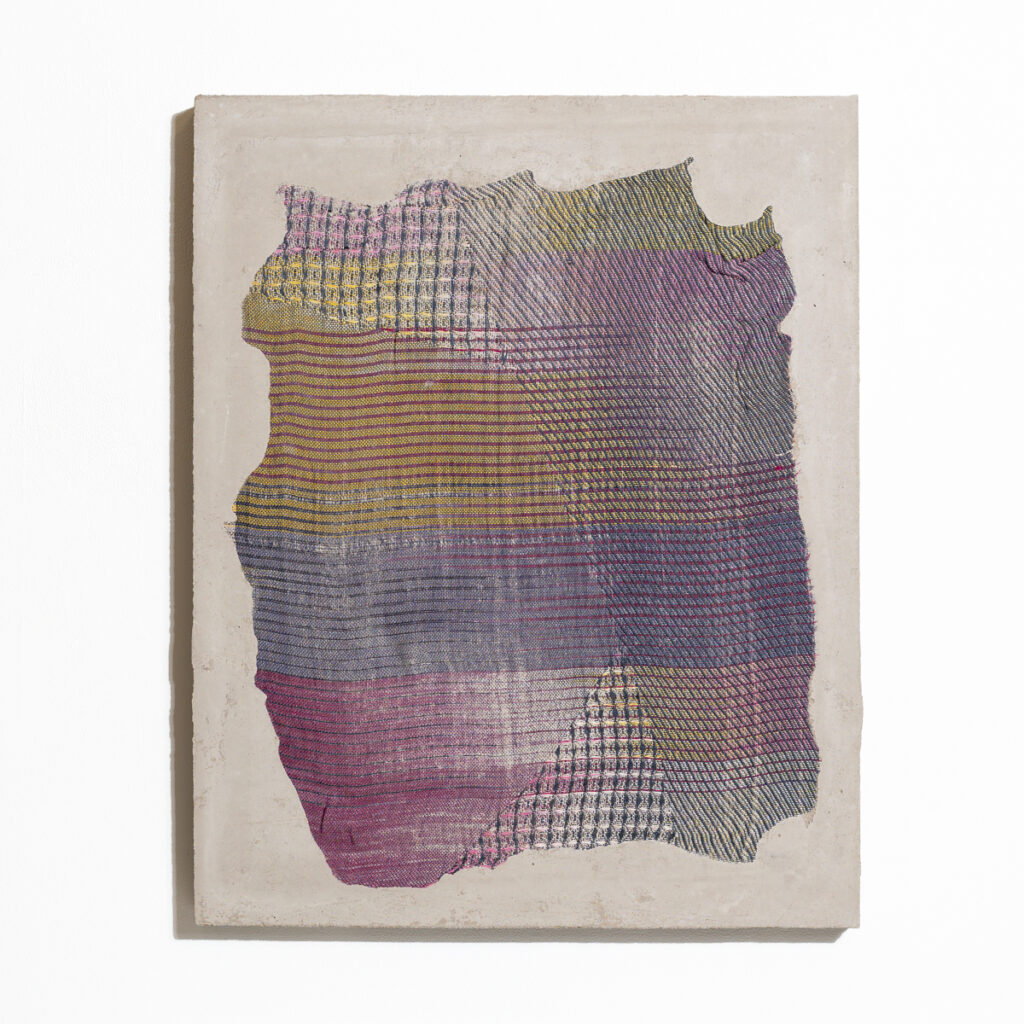
You have often described weaving as a form of construction, a “soft” architectural thought. How has your reflection on the concept of building evolved, and how does the act of weaving continue to guide your formal and conceptual research?
In my opinion, a textile can be much more alive because of its pliability and adaptability than something that is rigid and non-conforming. Textiles in a lot of ways perform the same functions as architecture, they can cover, protect and shield, but the adaptability of a fabric has the advantage of being a shapeshifter. It can be changed with each use and need. It can be folded and put away, be brought out and expanded to cover vast areas.
In the recent series Holding Space, I have been captivated by the building of layered weave structures. These structures work not only on the x and y axis of warp and weft but in a third dimension of the z axis. A weaver passes the shuttle from right to left and back again, building a fabric line by line. The loom advances only in one direction, however this weave structure employs weft threads woven down before advancing forward. When released from the loom the fabric unfolds, creating wide swaths of cloth or multiple layers of fabric within one plane. Thus, the weaver’s discipline employs a cyclical advancement, a practice of repetition and return. This thread is always in action, always moving in many directions and on many levels, folding in on itself and expanding out again, in repetition.
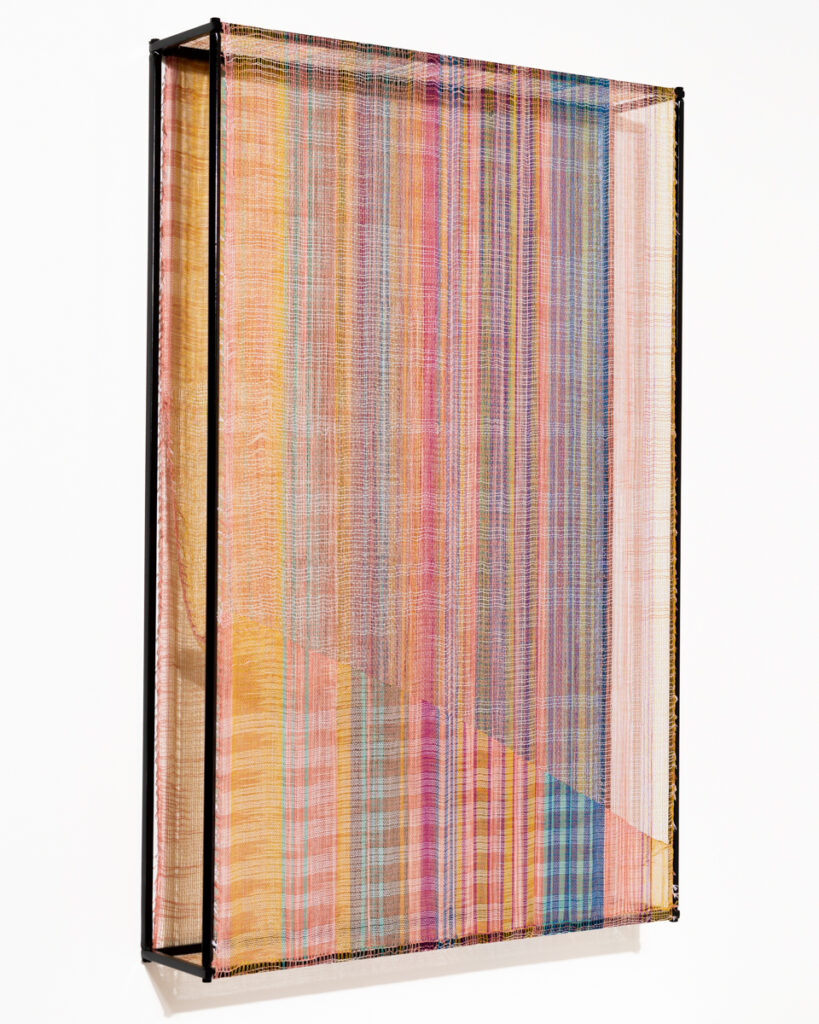
Looking ahead, which directions or experiments excite you most — in terms of material, scale, or dialogue with other disciplines such as dance or materials science?
In some ways I have always set my practice in dialogue with other disciplines either through conceptual strategy or collaboration. The further I work the more complex the ideas and the closer each discrete discipline becomes. I am currently in collaboration with a horticulturist, Shari Dutton, and a chemist, Anne-Frances Miller, on work in natural dye to study color in Kentucky. My show, The Ocean Never Gives Up, will travel from Vermont to be shown at SCOPE Art Fair in Miami. In 2026, I am continuing a project, the Shapes of Movement, collaborating with movement choreography and video. I am also working on a new body of work for an upcoming solo exhibition at Municipal Bonds San Francisco, CA. This new work incorporated soft metals such as pewter and aluminum that will compliment the pliability of woven cloth. Each collaboration and material investigation adds to and shifts the way I work. I am always learning and see my practice as an object of labor in a constant state of becoming, something that is pliable and alive.