FIBERS BEYOND THE OBJECT: INFRASTRUCTURE, ORGANISATIONS, ENVIRONMENTS
| by Eleonora Giglione |
For a long time, textiles have been understood primarily as surfaces: supports for images, construction materials, decorative elements, or functional objects. Even when textiles became firmly established within the language of contemporary art, critical reflection largely focused on their symbolic, narrative, or identity-related qualities. In recent years, however, a growing body of scientific and design research has begun to suggest a shift in perspective. Fabric is no longer considered merely as an object to be produced or contemplated, but as a device capable of actively participating in environmental processes. In other words, no longer simply a material, but an infrastructure.
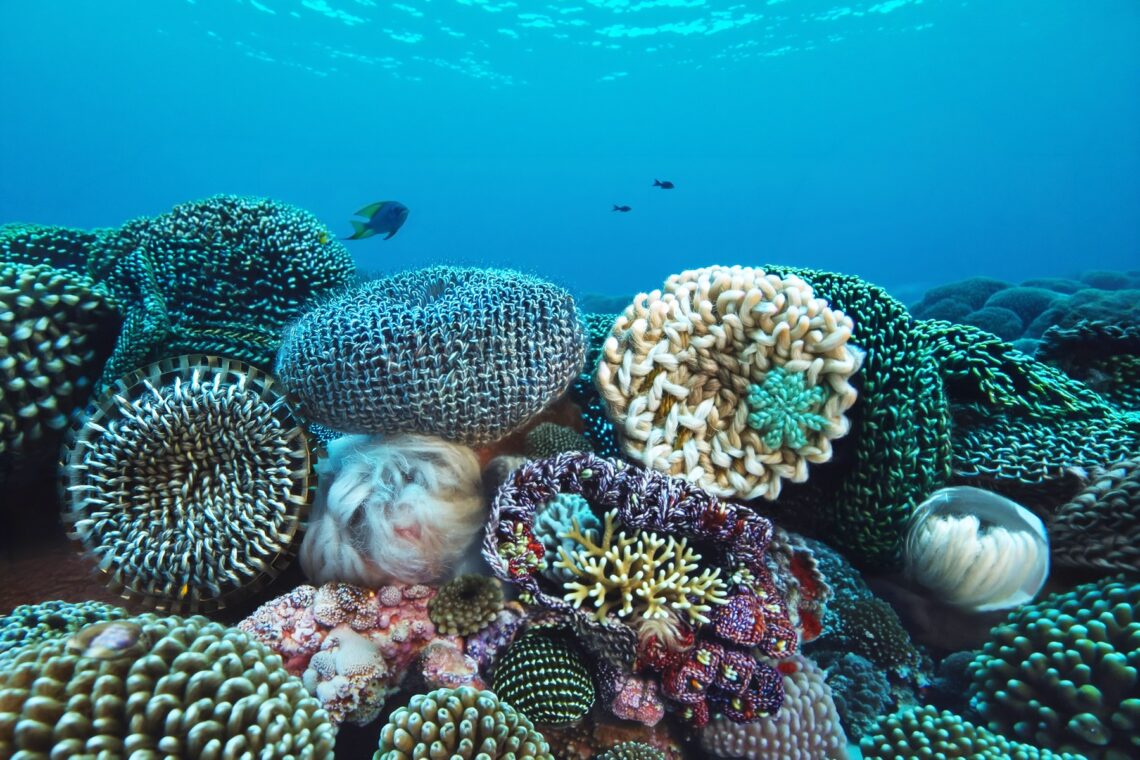
The difference is not merely terminological. An infrastructure does not represent a natural phenomenon; it takes part in it. A root holds the soil in place, a coral reef alters marine currents, a forest regulates its own microclimate. Increasingly, certain textile-based artefacts are being designed to perform analogous functions. Within this context, textiles cease to be elements that simply occupy a space and become systems that generate relationships between water, soil, living organisms, and biological processes.
This perspective raises an unusual question, particularly for those approaching textiles from an artistic viewpoint: can a fabric be considered “alive” because it participates in the vital processes of an ecosystem? The question concerns less biology than philosophy. Traditionally, we have distinguished objects from organisms through relatively clear categories. The former are constructed, the latter grow; the former are passive, the latter transform their surroundings. Today, however, this separation appears increasingly unstable. There are materials designed to decompose while nourishing the soil, textile networks that encourage vegetation to take root, and fibrous structures that become supports for the colonisation of marine organisms. Their purpose is not to persist, but to initiate processes that continue even after their own disappearance. (…)
FULL ARTICLE IS INCLUDED IN ATLAS – CHAPTER TWO, AVAILABLE FOR PURCHASE AT WWW.AL3VIEATC.COM/SHOP/ATLAS-CHAPTER TWO/ OR BY CLICKING ON THE COVER