I DIARI DEL CIGNO NERO: THE FRAGILITIES OF THE PRESENT IN THE WORKS OF FLORENCIA MARTINEZ
From September 24 to November 24, 2026, Gilda Contemporary Art, at Via San Maurilio 14 in Milan, presents I Diari del Cigno Nero, Florencia Martinez’s new solo exhibition, curated by Cristina Gilda Artese. The project is the result of nearly a year and a half of research and addresses some of the deepest fractures of the present: war, migration, violence, destruction, control, and displacement.
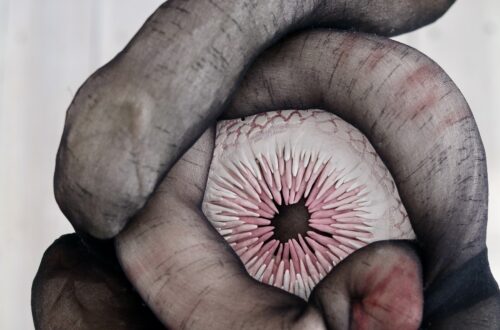
The title draws on the celebrated essay The Black Swan: The Impact of the Highly Improbable by Nassim Nicholas Taleb, reinterpreting its metaphor. If the black swan refers to an unpredictable event capable of radically altering the course of history, the diary becomes here a space in which such events are recorded: a place where they are collected, sedimented, and transformed into visual memory. Martinez does not, however, offer a directly political reading of the present. Her approach is rather anthropological, focusing on the way human beings respond to their constant exposure to images of violence, to collective suffering, and to the progressive desensitization to horror.
The exhibition is structured around three thematic sections – Stratificazioni o Morfologia della memoria, Invisibilità, and Conquiste – conceived as three chapters of a single narrative.
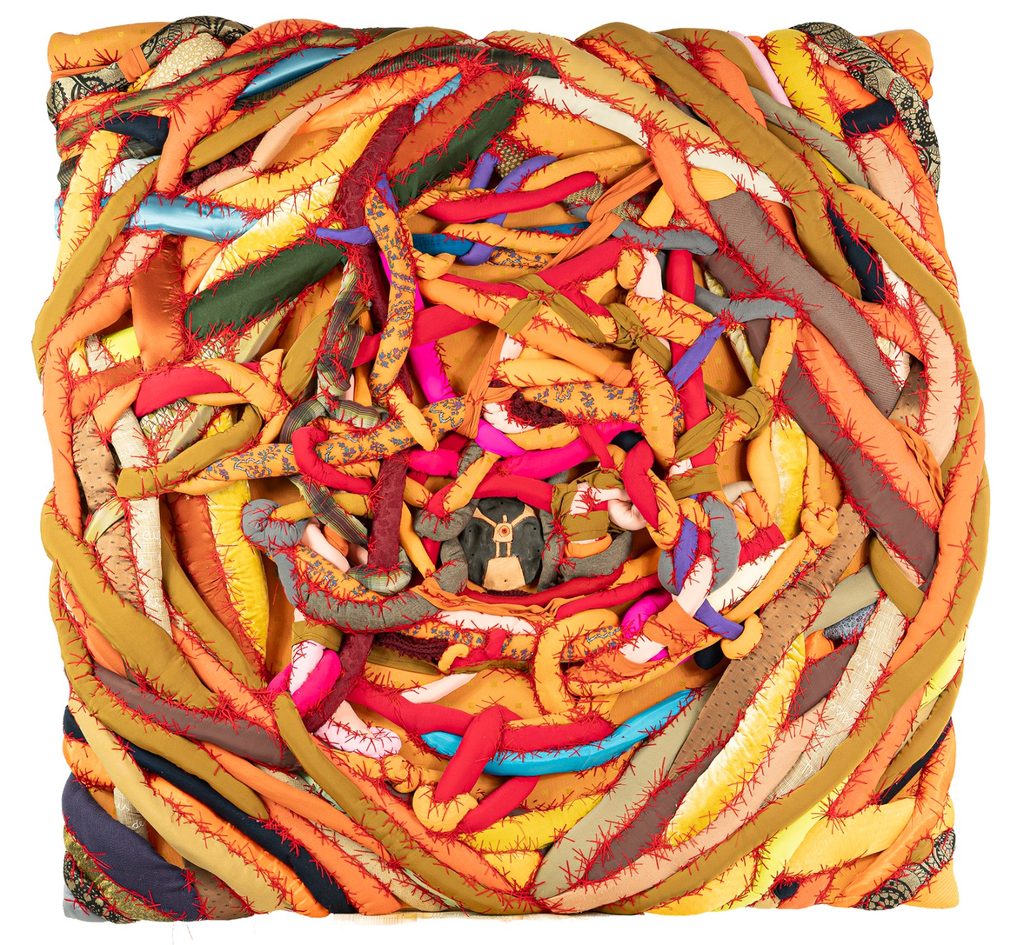
The exhibition opens with Bulldozing, a series of large-scale textile works made almost entirely from reclaimed materials. Discarded fabrics, fragments, and remnants are stitched and layered to create dense surfaces dominated by earthy tones, burnt oranges, and browns. The material thus becomes a repository of traces: a landscape continually demolished and rebuilt, evoking not only the destruction of places but also the loss of relationships, identities, and collective memory.
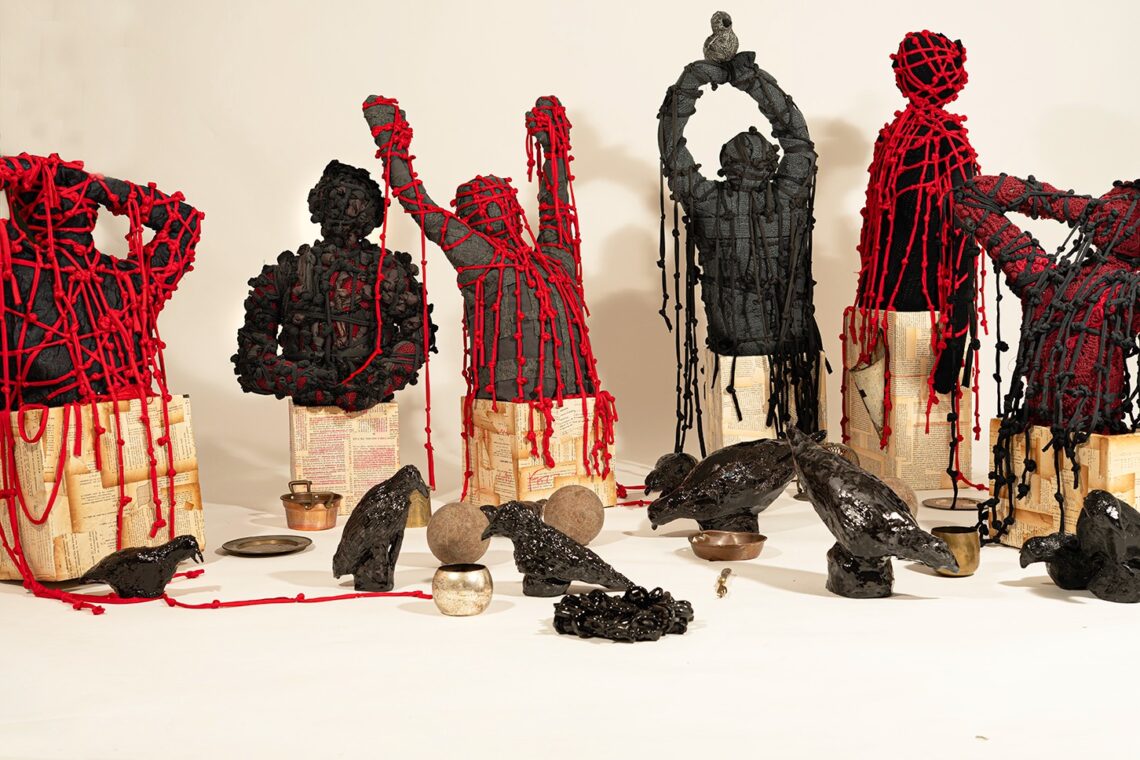
At the heart of the exhibition is an installation developed around a phrase spoken during a televised debate concerning the Israeli-Palestinian conflict, which quickly went viral: «Mi definisca bambino». Martinez takes this question – posed in an attempt to challenge the innocence of victims in armed conflicts – as an emblem of the ethical disorientation of our time. Childlike figures enclosed within knotted structures, bowls associated with hunger, ceramic crows, and references to mechanisms of control and power come together in an immersive environment devoted to vulnerability. In this way, the artist addresses the tragedy of conflict without resorting to rhetoric, allowing the complexity of a condition that extends beyond the boundaries of any single geopolitical context to emerge.
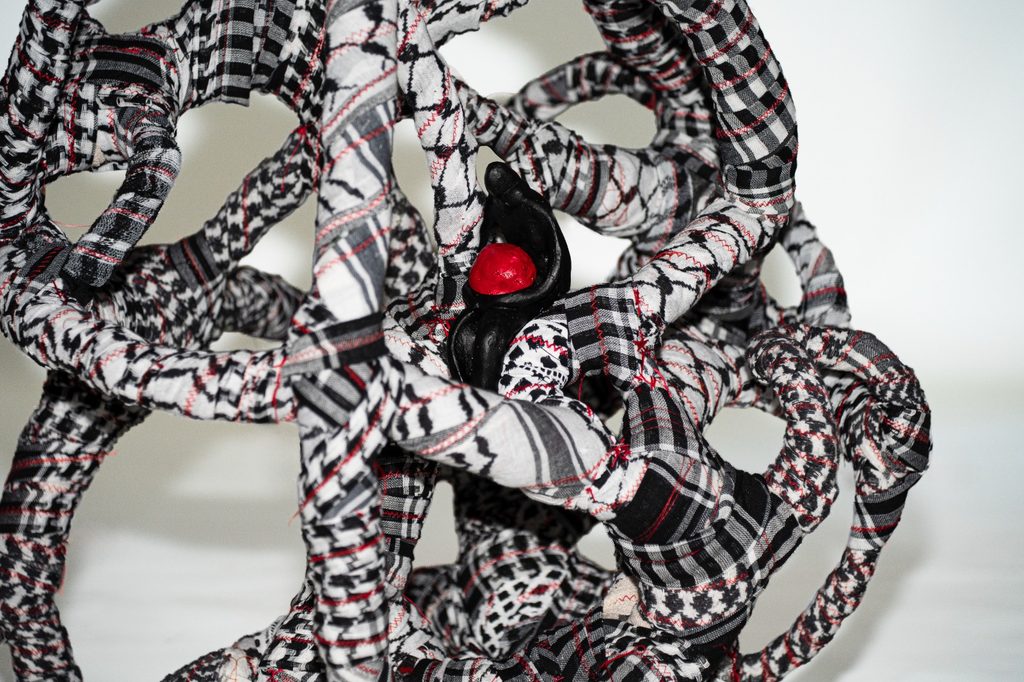
The exhibition concludes with Palazzi di cristallo, a series that initially appears lighter and more decorative. Yet, on closer inspection, stories of migration and uprooting, families on the move, and lives suspended between places begin to emerge. The apparent lightness of the surfaces becomes a way of encouraging viewers to look beyond the image and engage with its deeper symbolic dimension.
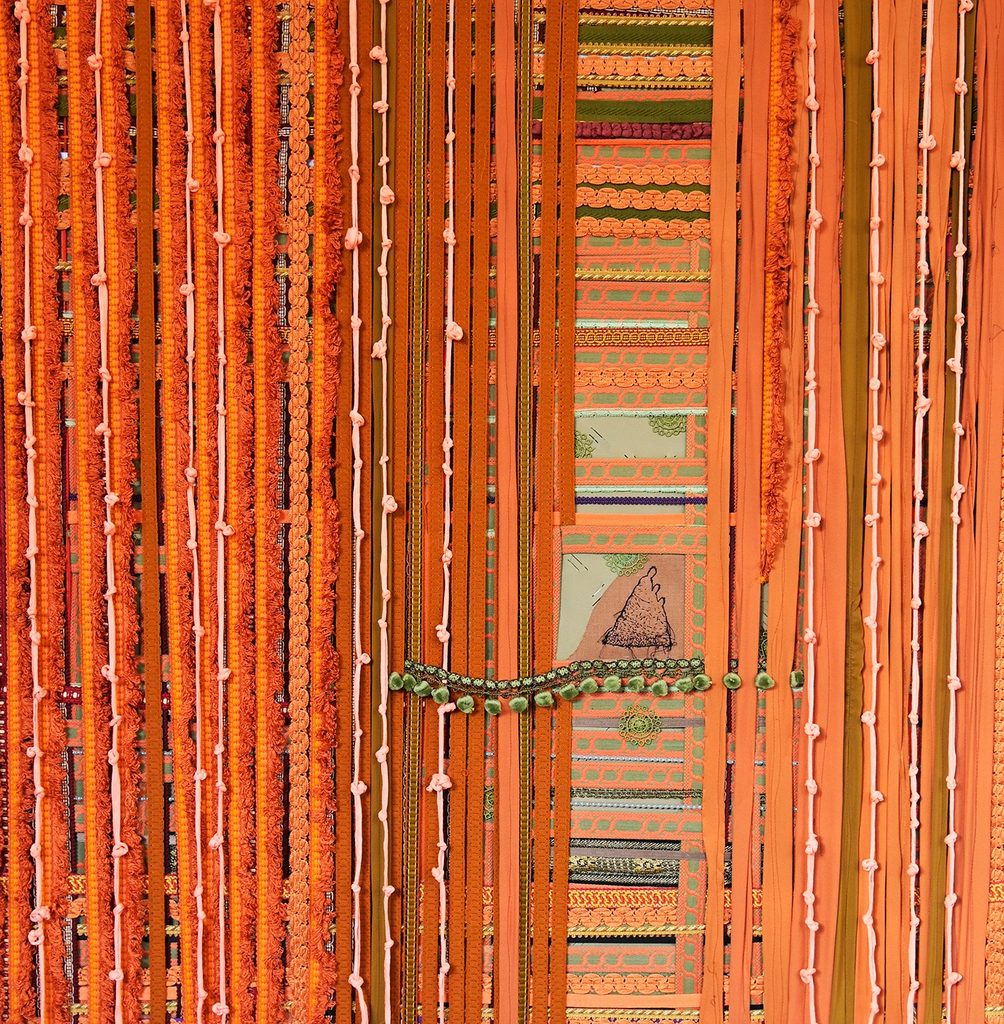
Fiber art is the language through which Martinez develops the entire project. With its possibilities of layering, stitching, and re-stitching, fabric takes on a metaphorical significance: it becomes an image of the wounds of the present, but also of the possibility of reconstructing what appears to have been irreparably torn apart. The almost exclusive use of reclaimed materials further transforms the works into genuine archives of memory, taking objects and materials away from their original function. This represents a central strand of the Argentine artist’s practice in Italy, which has consistently moved between and brought into dialogue different media, from installation and photography to drawing and textile practices.
The choice of materials also introduces the theme of sustainability, in keeping with the identity of Gilda Contemporary Art. Since its foundation, the gallery has maintained a concrete commitment to environmental responsibility by offsetting its CO₂ emissions through Phoresta ETS, integrating this approach into its cultural and curatorial activities.
For Cristina Gilda Artese, director of Gilda Contemporary Art and curator of the exhibition, I Diari del Cigno Nero represents an important development in Martinez’s artistic research: «Alla dimensione autobiografica e intimistica delle sue ricerche precedenti si affianca oggi uno sguardo più ampio, capace di interrogare l’essere umano nella sua dimensione collettiva». According to Artese, the project approaches complex issues with rigor, avoiding both straightforward reportage and ideological simplification, and instead relying on art’s ability to create a language that can be universally shared.
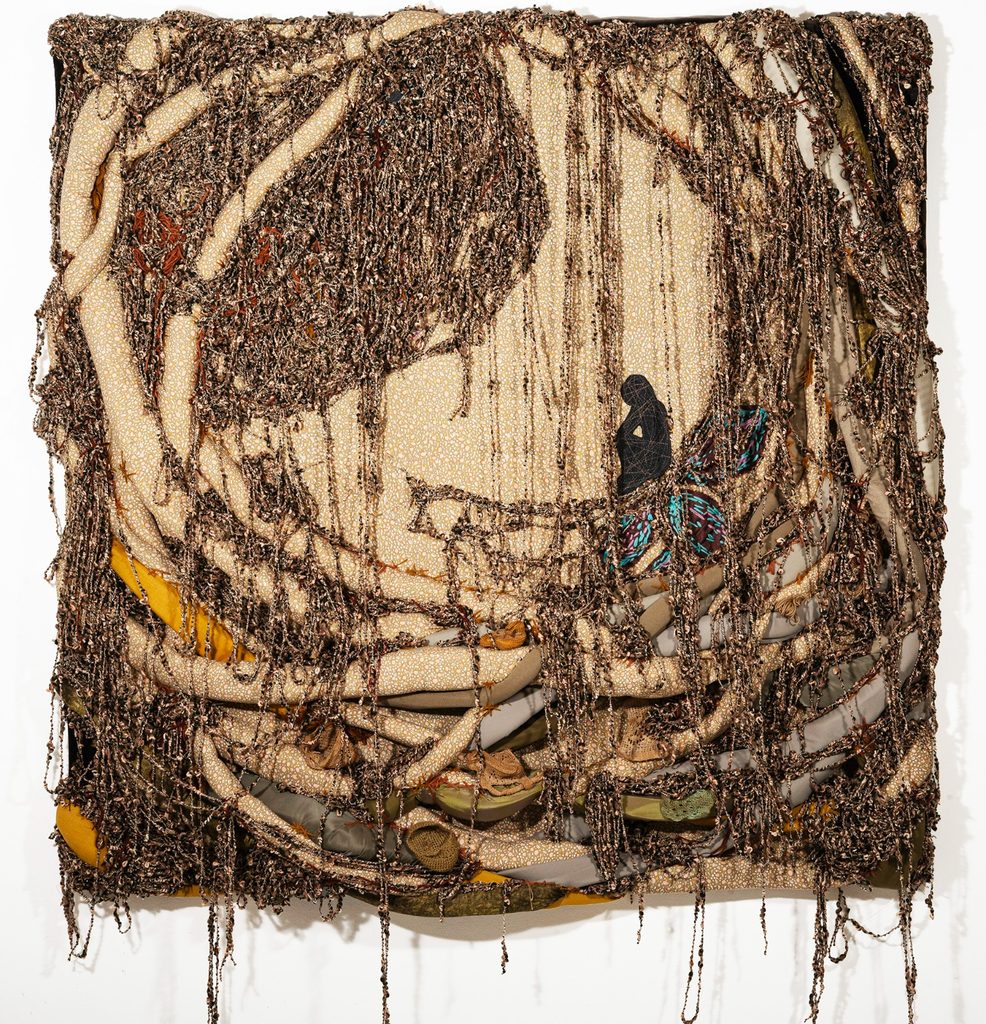
The exhibition also marks Florencia Martinez’s return to Gilda Contemporary Art following Tundra. In the final stage of the exhibition, a group of photographs created using infrared technology will be presented. Conceived as a natural continuation of the exhibition, these works introduce a different perspective, opening up the possibility of a dimension of hope and new ways of imagining the future.
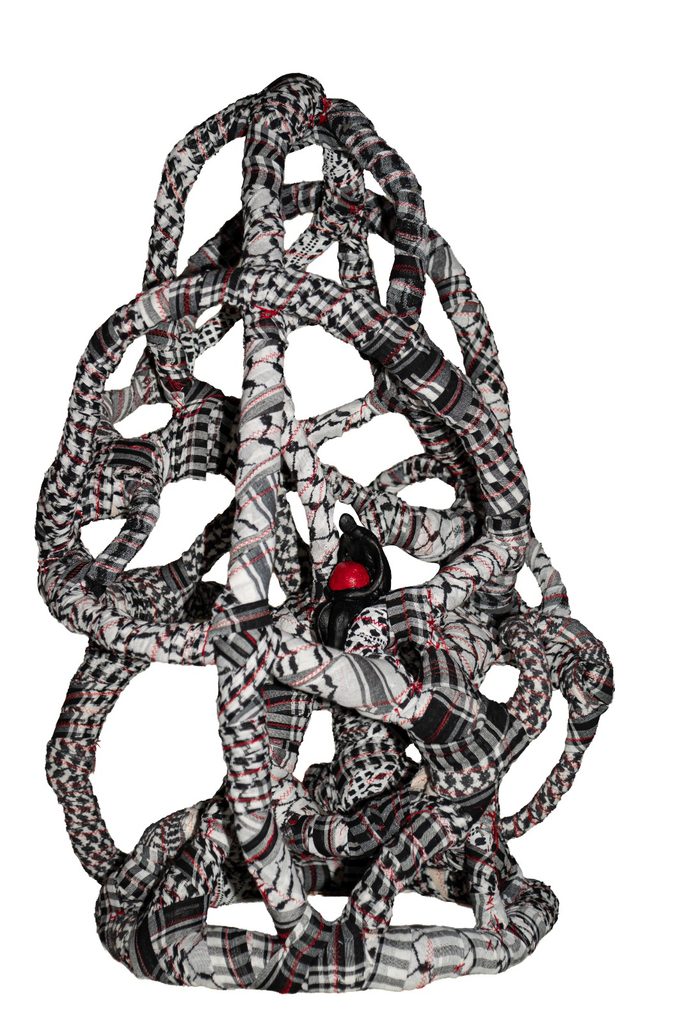
Born in Argentina and based in Italy, Martinez pursues a multidisciplinary practice encompassing fiber art, installation, photography, and drawing, as well as experimentation with materials and textile-based practices. Her choice of medium varies according to each project and the questions it seeks to explore. Memory, identity, human relationships, and profound social transformations are among the recurring themes of her work. A particularly strong material and conceptual dimension characterizes a practice in which art becomes a means of observing the contemporary world, bringing individual experience into dialogue with the collective dimension. Since 2014, she has taught Photography at ACME.