
DANIELE DAVITTI: NAMELESS ART BETWEEN THREAD, FABRIC, AND IMPERFECT BEAUTY
|by Susanna Cati |
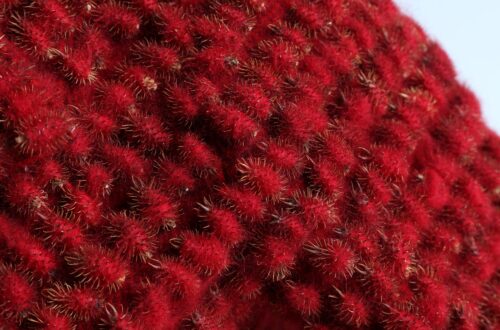
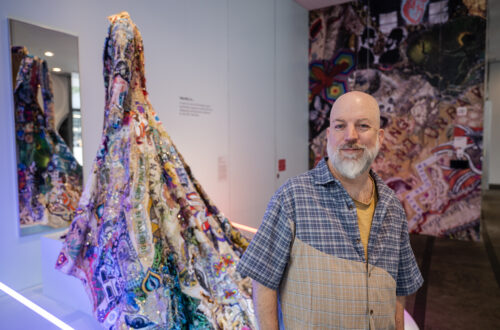
There comes a moment in the journey of certain artists when the need to define oneself ceases to make sense. It is from this subtle and decisive threshold that Daniele Davitti’s work takes shape. Born in Florence in 1986, his practice moves freely between painting, textiles, embroidery, and collage, deliberately rejecting any attachment to a specific category. His education in Fashion Design at Polimoda, followed by studies at Bunka Fashion College in Osaka, represents far more than an academic path: it is the origin of a design sensibility grounded in essentialism and a profound attention to materials. Defining the work of this artist is, by his own admission, an almostimpossible task. His education originates in the world of traditional visual arts: painting and illustration, practiced for over a decade, alongside experiences in theatrical costume, textiles, and collage.

And yet, despite this multifaceted path – or perhaps precisely because of it – the most frequent question he has been asked over the years has always been the same: Who are you, exactly, and where do you fit? His response takes shape in an idea as simple as it is radical: a “nameless art.” An art that refuses labels and categories, and that escapes the need to be defined. For him, a work should not be explained but felt. “The artistic experience,” he maintains, “is first and foremost emotional, not intellectual.” It is also for this reason that he keeps a distance from conceptual art, toward which he feels little interest. What matters is not what a work “means,” but what it “makes you feel.”

This position, however, is not without consequences. In a contemporary art system founded on classifications, segmentations, and algorithms, being “indefinable” means being difficult to place. His work spans different fields: embroidery and textile art, but also drawing, painting, and collage; it moves between museum art, interior design, and high fashion; it is exhibited both in contemporary art fairs and in artisanal contexts, galleries, and shops. A richness that, on a promotional level, requires greater effort for both the artist and the audience. Yet it is precisely this variety that constitutes the heart of his research: a constantly changing terrain, full of surprises, deviations, and possibilities. (…)
FULL ARTICLE IS INCLUDED IN ATLAS – CHAPTER ONE, AVAILABLE FOR PURCHASE AT WWW.AL3VIEATC.COM/SHOP/ATLAS-CAPITOLO-UNO/ OR BY CLICKING ON THE COVER