MIREILLE LIÉNARD: PURE AND PROFANE RED. IN THE WORK OF THE BELGIAN ARTIST, THE POWER OF ACOLOUR THAT EVOKES CLASSICAL MYTH AND PHILOSOPHY
| by Valeria Tassinari |
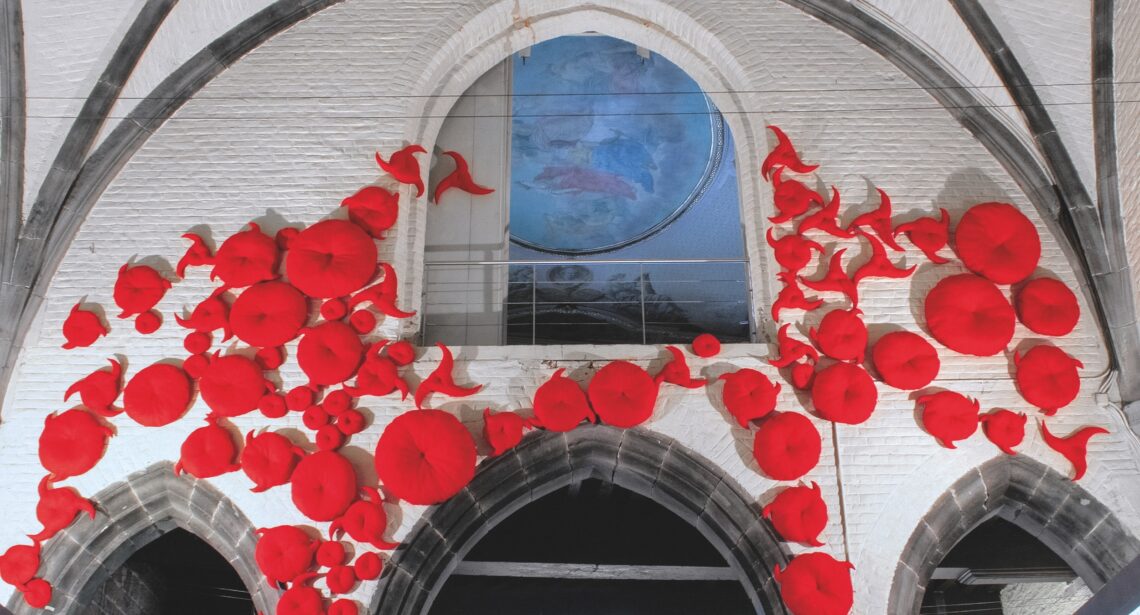
A dynamic interplay of forces between forms, endlessly reshaped by the vital energy that governs every creative act; a system of apparent oppositions: impulses toward unfettered life and the rigour of control, the impenetrability of metal and the softness of fabric, sealed surfaces and traversable spaces, small reliquaries as powerful as impregnable fortresses, and enlarged cells like alluring enchantments. Mireille Liénard’s work draws you into a universe where cold and warmth, distance and intimacy, dance together.
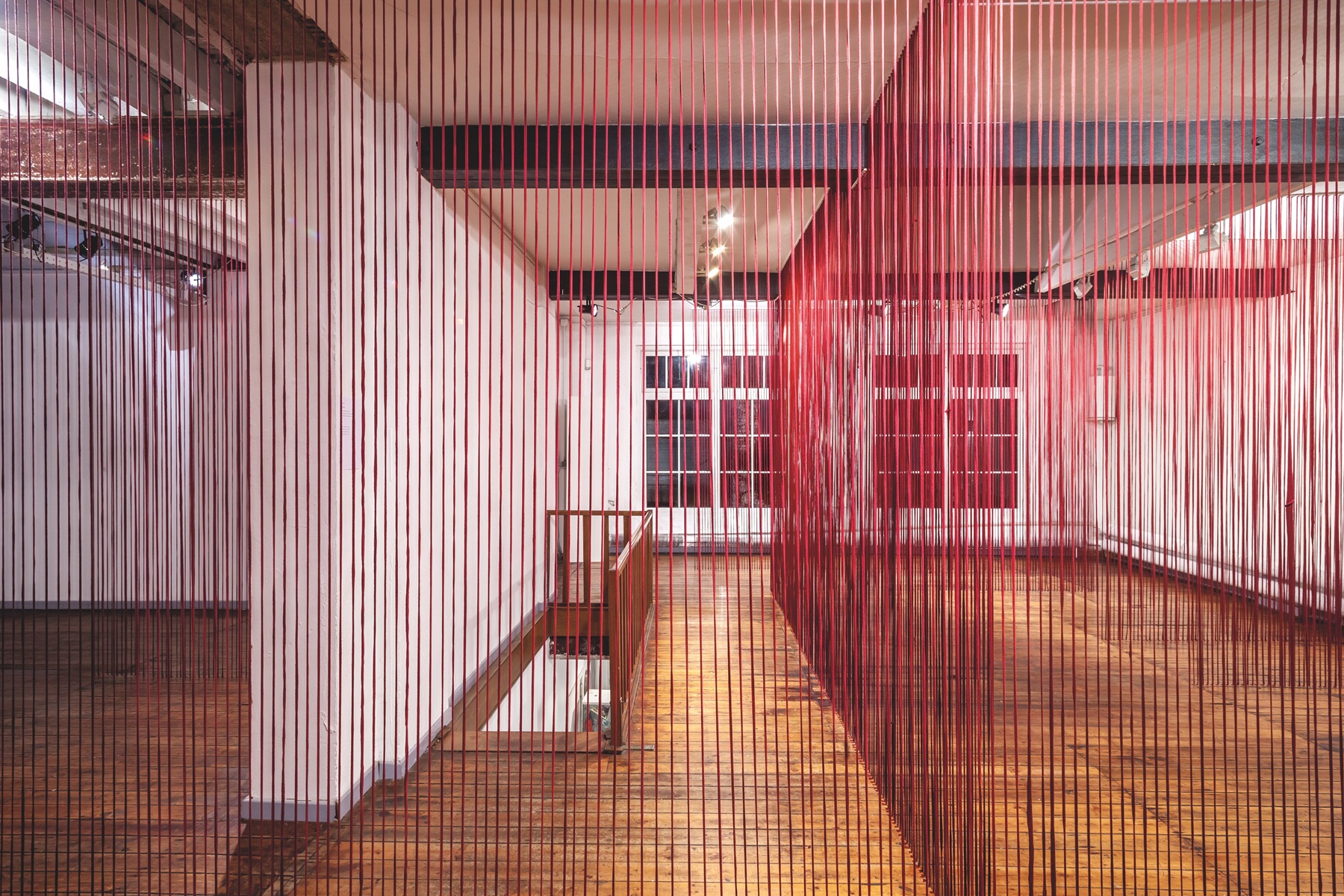
Eros and Thanatos, unmistakably, yet suspended in a rare tightrope balance, a red thread stretched between ancestral memory and a contemporary vision of art. A vision that still seeks to embody magical thinking – the very mode of thought from which mythic narrative and philosophy were born, joined like different twins. There is certainly the complexity of the classical world in Mireille Liénard’s work, roots in the West and a gaze
turned towards the East, and there is always that red thread, fil rouge as both metaphor and material: conceptually, a path, a connection, a constraint or a seduction, but also fabric, weave, warp and weft.
Born in Brussels in 1963, Mireille Liénard has long worked both as a visual artist and as a promoter and curator of cultural events of international scope. In both fields, she brings with determination and sensitivity the themes and values that have informed her artistic research since her formative years.
Raised in a cultivated family that introduced her from an early age to art, museums and classical culture, she went on to study sculpture at La Cambre, the National School of Visual Arts in Brussels, where she specialised in metallurgy. She subsequently embarked on an intense exhibition career, receiving the Prix pour la Jeune Sculpture in 1997 and soon establishing herself among the emerging artistic figures of her generation.
Deeply interested in craftsmanship, and consistently committed to personally overseeing the technical and material aspects of her production, the artist continually explores the close relationship between meticulous attention to detail and the ideas underlying each body of work. If her practice is rooted in the material dimension in its search for concreteness, the drive to identify a disquieting balance between form and symbols – one of the defining features of her poetics – draws inspiration from the conceptual dimension of the ancient world, particularly ancient Greece, which she has studied extensively and reinterpreted through direct experience.
….
FULL ARTICLE IS INCLUDED IN ATLAS – CHAPTER TWO, AVAILABLE FOR PURCHASE AT WWW.AL3VIEATC.COM/SHOP/ATLAS-CHAPTER TWO/ OR BY CLICKING ON THE COVER