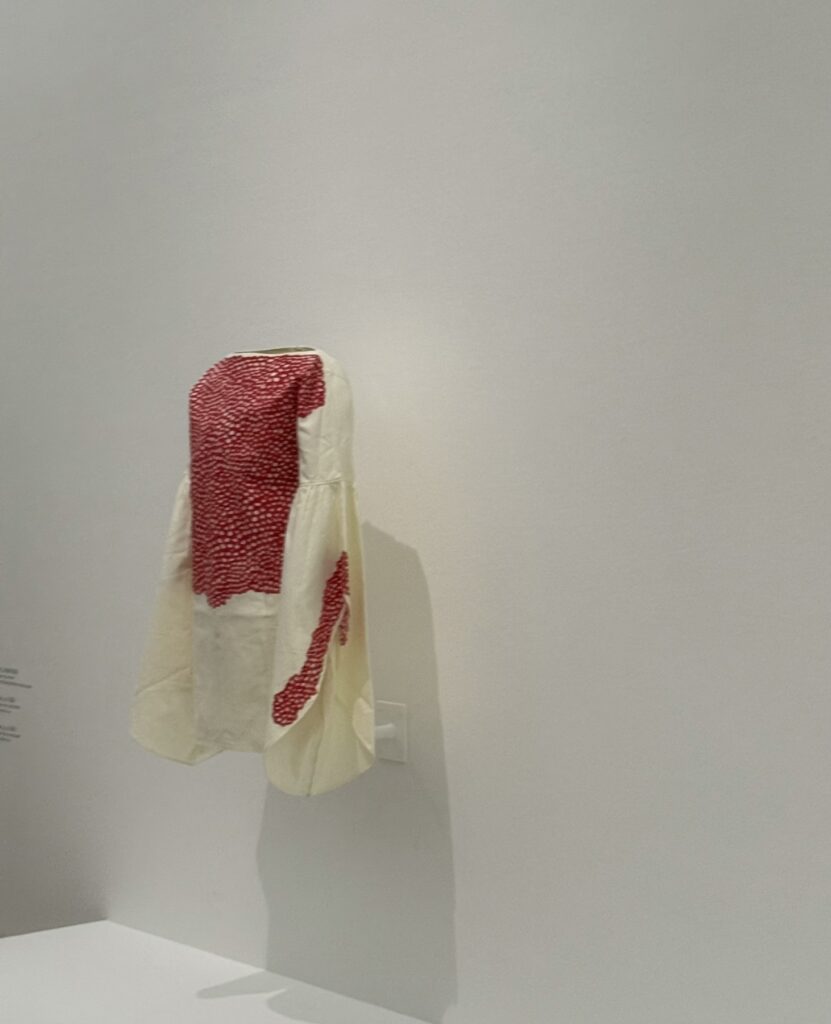

THE TEXTILE ROOTS OF EMANCIPATION AND FASHION AS AN ACT OF LOVE: YAYOI KUSAMA, THE ART OF OPENING UP TO THE WORLD
| by Susanna Cati |
The Fondation Beyeler presents from October 12, 2025 through January 25, 2026, the first retrospective in Switzerland dedicated to the renowned Japanese artist Yayoi Kusama (b. 1929, Matsumoto). Organized in close collaboration with the artist and her studio, the exhibition offers a comprehensive overview of Kusama’s oeuvre, spanning more than seven decades of artistic creation. Iconic works will appear alongside lesser-known pieces — some never before shown in Europe—as well as a new production and one of her celebrated Infinity Mirror Rooms.
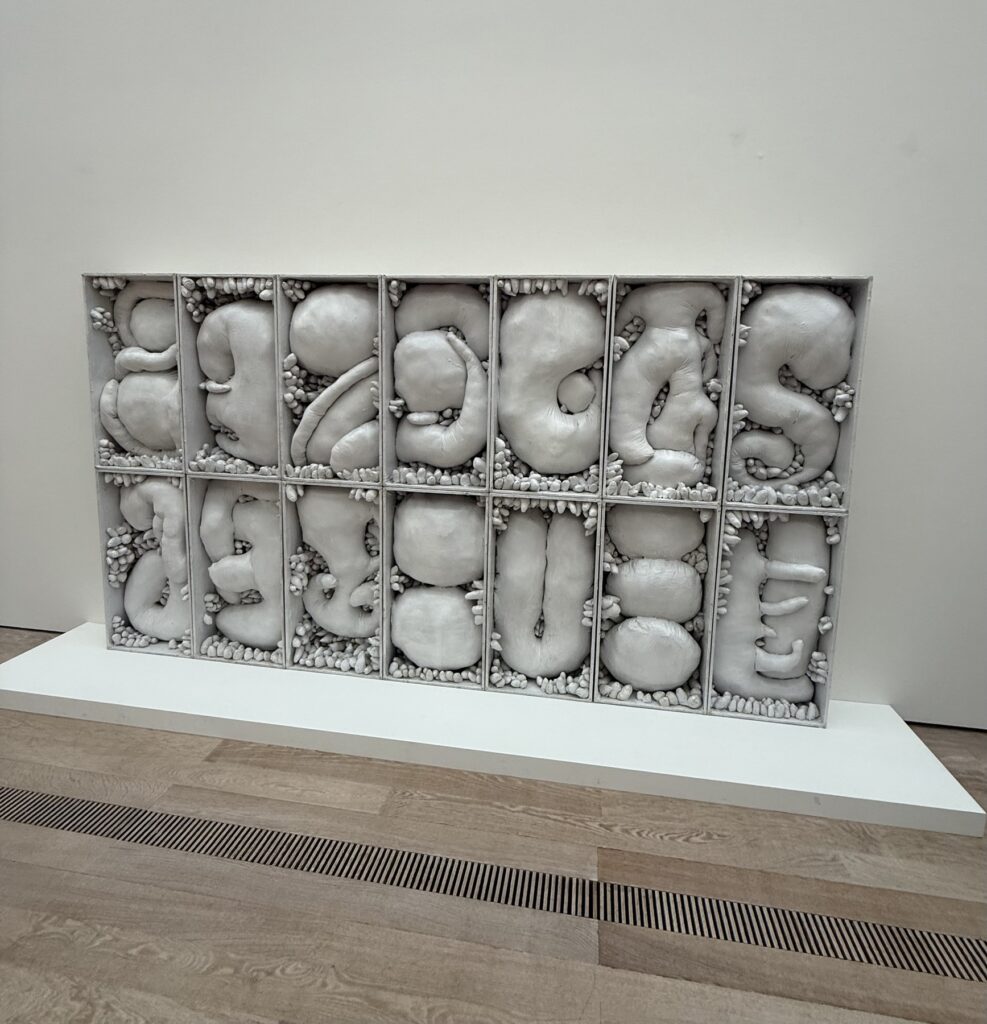
A world-renowned artist and an icon of contemporary art, Yayoi Kusama has achieved cult status through her relentless exploration of repetitive patterns and structures — most notably her signature polka dots and mirrored environments that transport viewers into infinite worlds, suspended between reality and illusion.
The exhibition highlights the extraordinary range of expressive media Kusama has employed over the years: painting, sculpture, installation, drawing, collage, happenings, live performance, fashion, and literature. It traces a journey that reveals the visionary force and poetic coherence of an artist capable of transforming obsession into a universal language — and art into an immersive experience of the infinite.
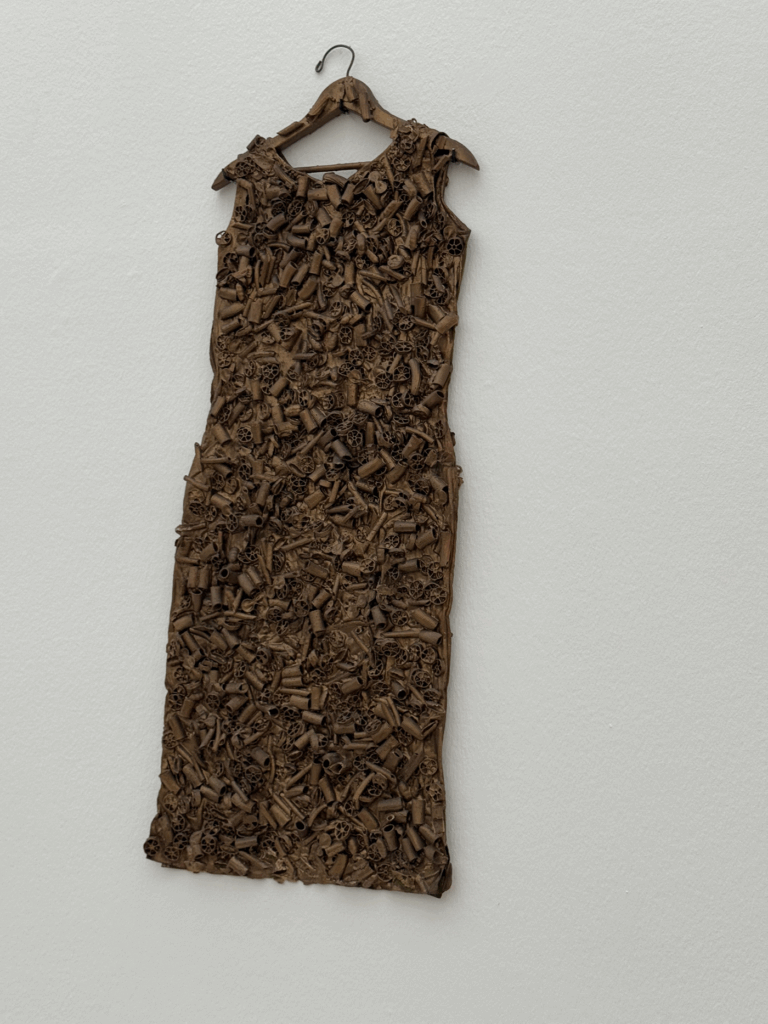
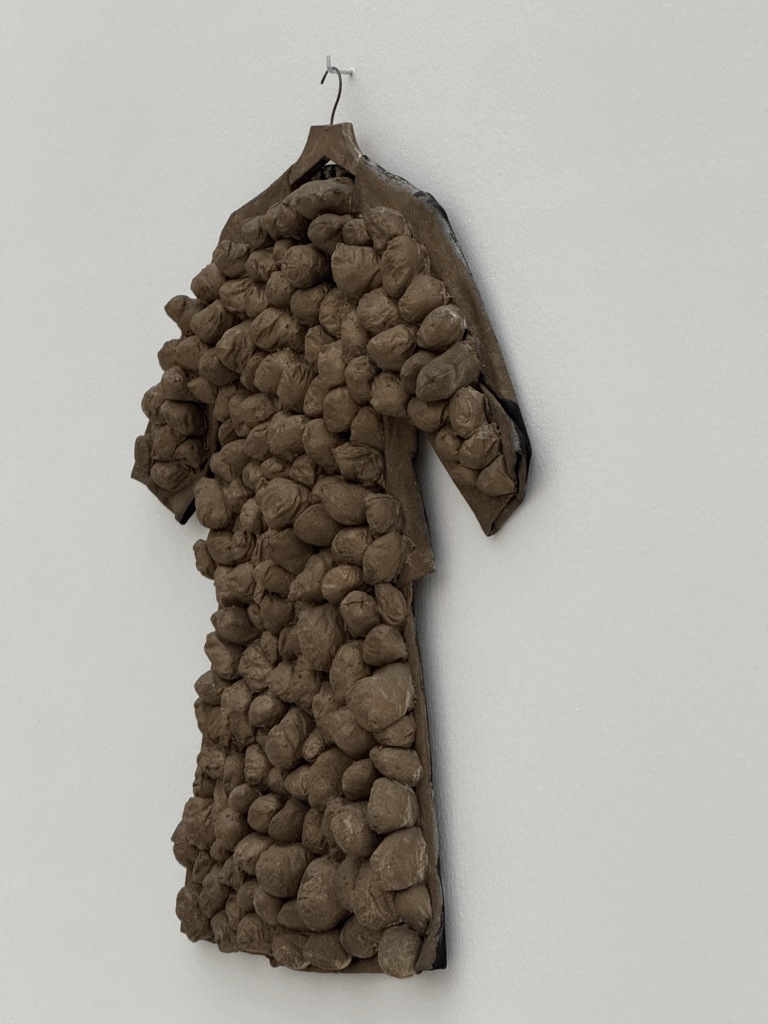
Kusama’s textile works also tell a story of personal and artistic emancipation. As a young woman during the Second World War, she worked as a seamstress in a parachute factory — an experience that profoundly shaped her relationship with materials and with the act of sewing. This dimension of her practice, often less known than the mirrored installations or the iconic polka dots, testifies to her determination to dissolve the boundaries between art, everyday life, and individual freedom, making the body itself a field of aesthetic and political experimentation.
In the early 1960s, Kusama began a radical transformation of everyday objects: furniture, tableware, and clothing became surfaces to be reinvented. She applied organic forms made of stuffed fabric to these objects and then unified them under a layer of monochrome paint. With this gesture, she transferred into sculpture one of the central principles of her painting: the seemingly infinite accumulation of similar elements — an obsessive, hypnotic visual rhythm that would come to characterize her entire body of work. In this process, the objects’ original function gradually loses importance, giving way to a new symbolic and sensory dimension. Transformed in this way, they become an interface between art and life, a terrain where the everyday merges with imagination.
For years, Kusama herself embodied this fusion: during happenings, artistic events, and photo shoots, she wore a dress covered with phallic forms, making her own body an integral part of both her work and her poetics of the infinite.
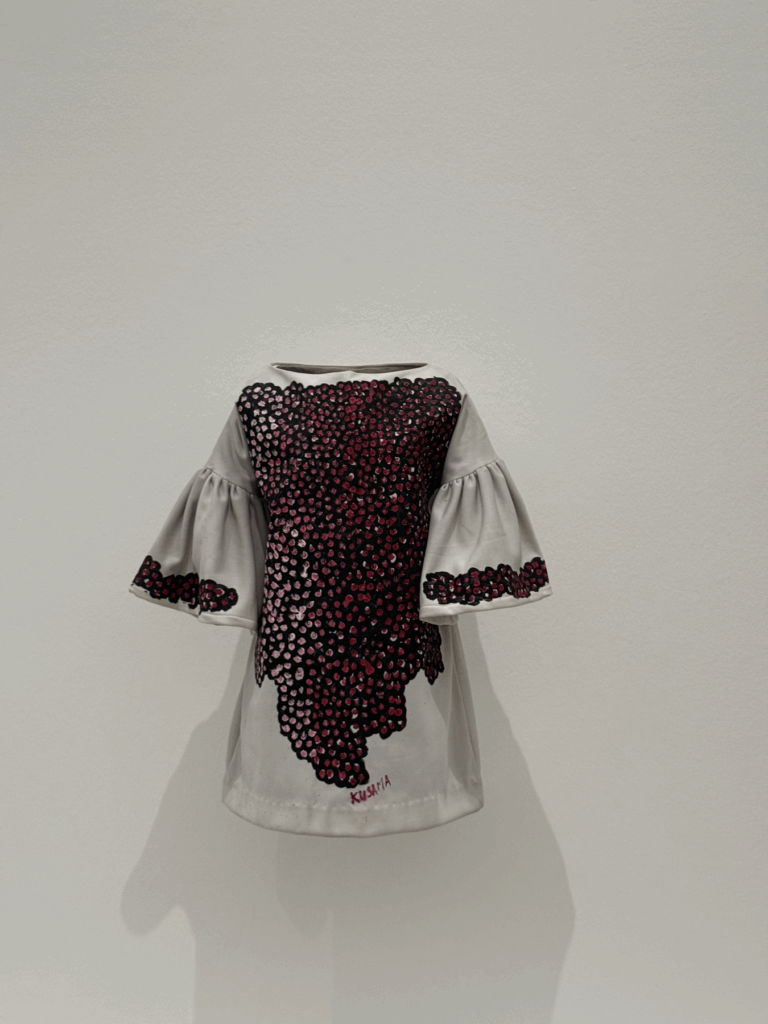
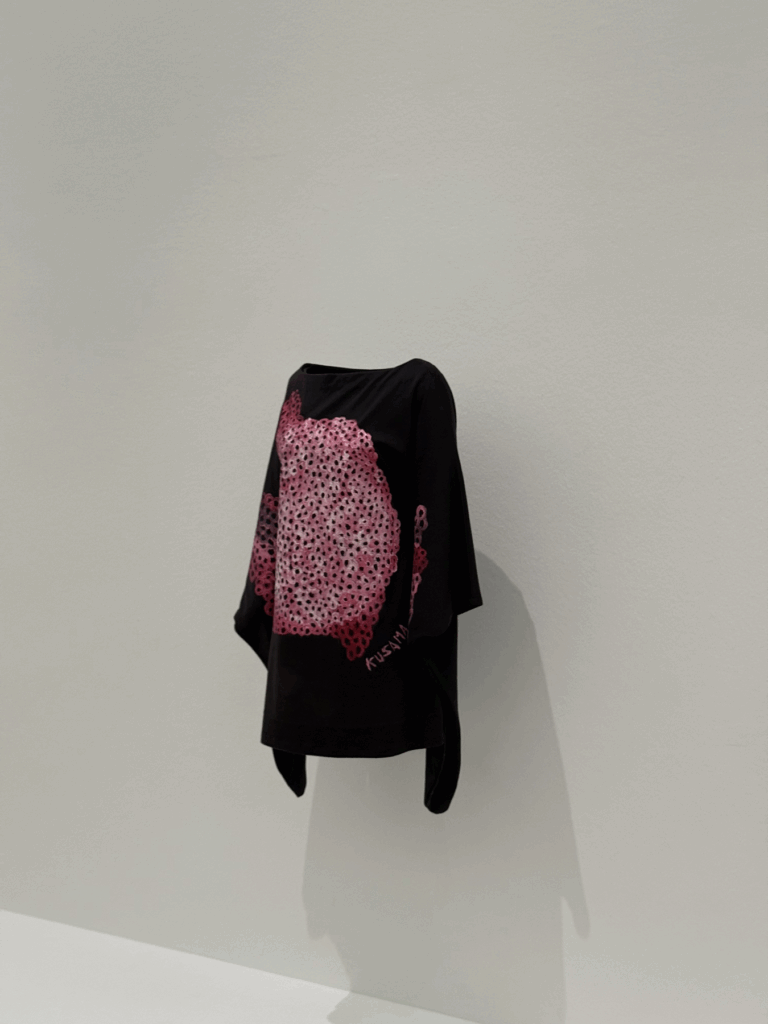
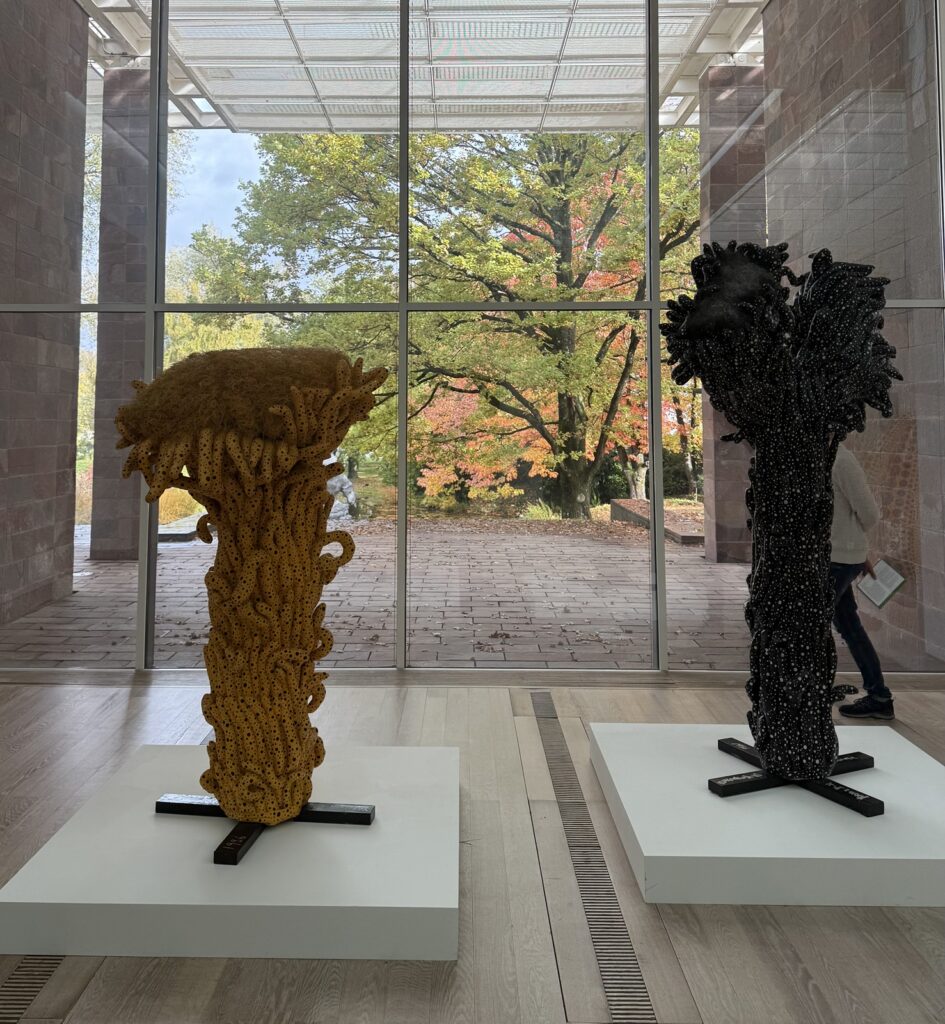
Black Flower and Pollen are, among others, emblematic examples of Kusama’s soft sculptures — works that strikingly echo the aesthetic of her creations from the 1960s. In these two sculptures, however, Kusama goes beyond a simple repetition of gesture: Black Flower and Pollen take the form of organically grown plants, evoking the vital force and cyclical nature of life. The polka-dot motif — the unmistakable hallmark of her visual language — here becomes a fluid, immersive presence, a thread that runs through and unites every dimension of her work: from painting to drawing, from sculpture to installation, and through to performance. For Kusama, polka dots are not merely an aesthetic device but a universal principle. She regards them as intrinsically connected to life, nature, and the cosmos — a metaphor for the interconnection between living beings and the infinite, capable of merging the microcosm of the body with the macrocosm of the universe.
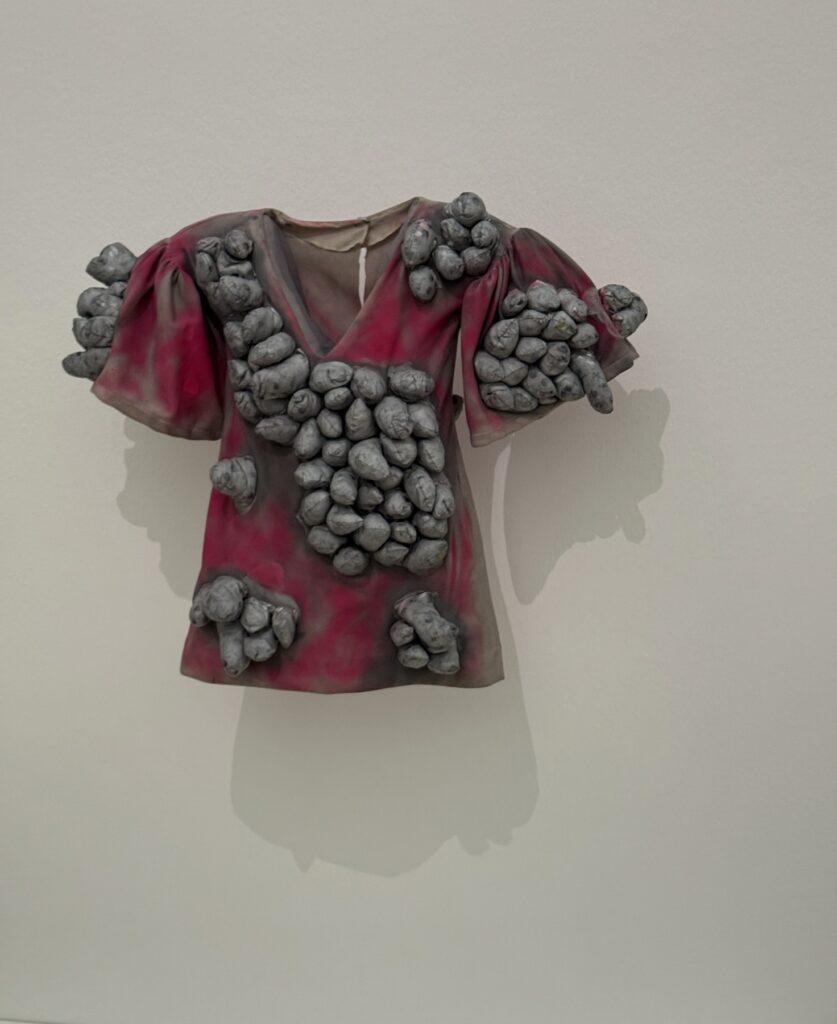
In the 1950s, Kusama began creating her own garments, transforming sewing into a means of creative expression and identity affirmation. From the 1960s — at the height of the sexual liberation era — her work became even bolder: she designed radical fashion pieces with unconventional shapes and obsessive patterns, later marketed through her brand, Kusama Fashion Incorporated. For Kusama, clothing is not mere ornament but an extension of the body and a means of connecting with the world. In her view, garments should “open” the body outward, enabling a direct dialogue between the individual and the environment. From this perspective, many of her prêt-à-porter pieces feature holes, slits, and openings — formal solutions that do more than embody a radical aesthetic; they enact an idea of shared freedom and vulnerability. Clothing thus becomes a tool for relation, a bridge to the other. In this way, fashion is transformed into a true form of love — a language through which the artist explores the desire for union, the possibility of contact, and the tension toward the infinite that courses through her entire oeuvre.
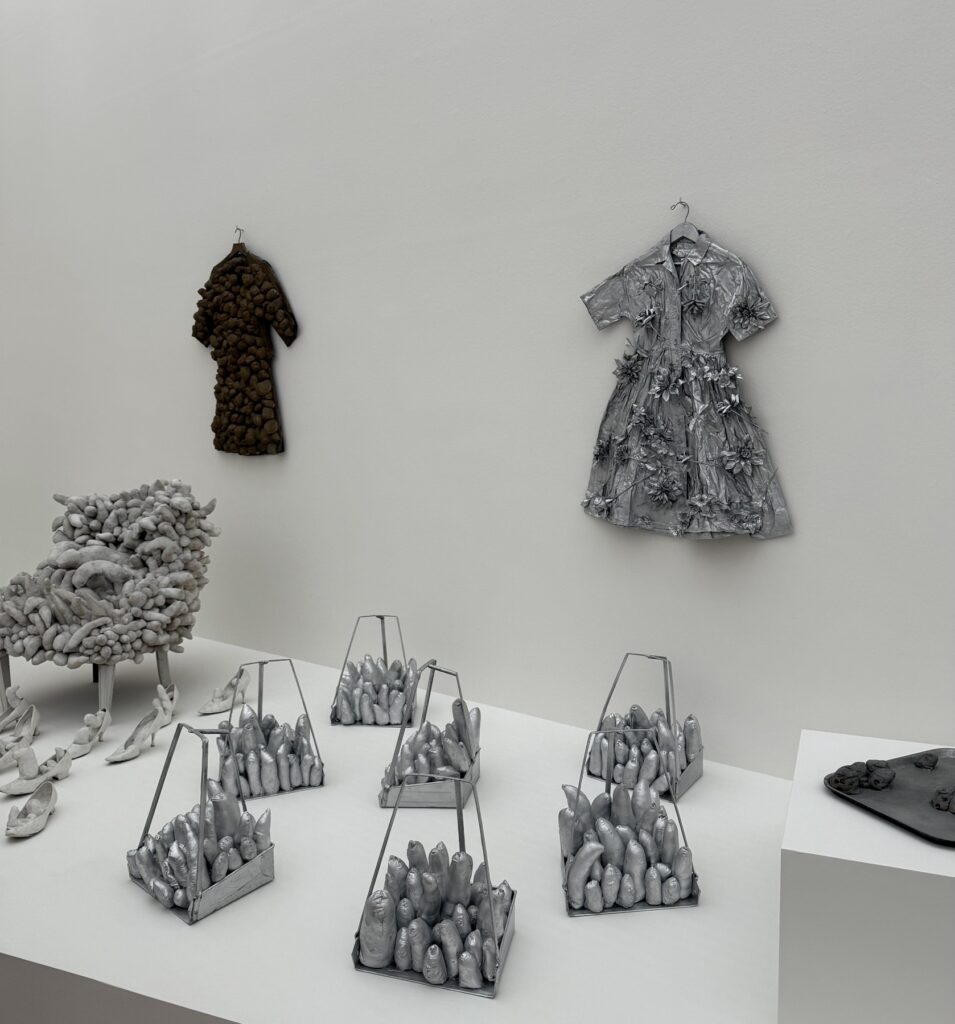
The garments Kusama created for various occasions are a key element in constructing and staging her artistic person — a conscious strategy she has pursued since the outset. Already in the early 1950s in Japan, she had herself photographed wearing a blouse she had sewn, posing in front of her works — an early example of how clothing became integral to her visual and identity language. Throughout the 1960s, fashion assumed an increasingly central role in her practice, becoming a field for experimentation and creative freedom. In tune with the spirit of sexual liberation, Kusama began designing radical clothing that went far beyond her personal wardrobe. These garments first appeared in her performances and happenings before reaching the market through Kusama Fashion Incorporated, the fashion house she founded in 1969. Her creations stood out for a daring balance of irony and provocation. In the See-Through collection, for instance, fabrics were perforated with circular openings that revealed the genitals and other erogenous zones, openly challenging the taboos of the time. Equally emblematic were the various versions of the Orgy Dress, a garment designed to accommodate between two and twenty-five people, allowing them to appear simultaneously nude and clothed in public.
Through these works, Kusama transformed fashion into an artistic and political gesture — a means of exploring the body, collectivity, and freedom—reaffirming her pioneering role in merging art, life, and desire.