
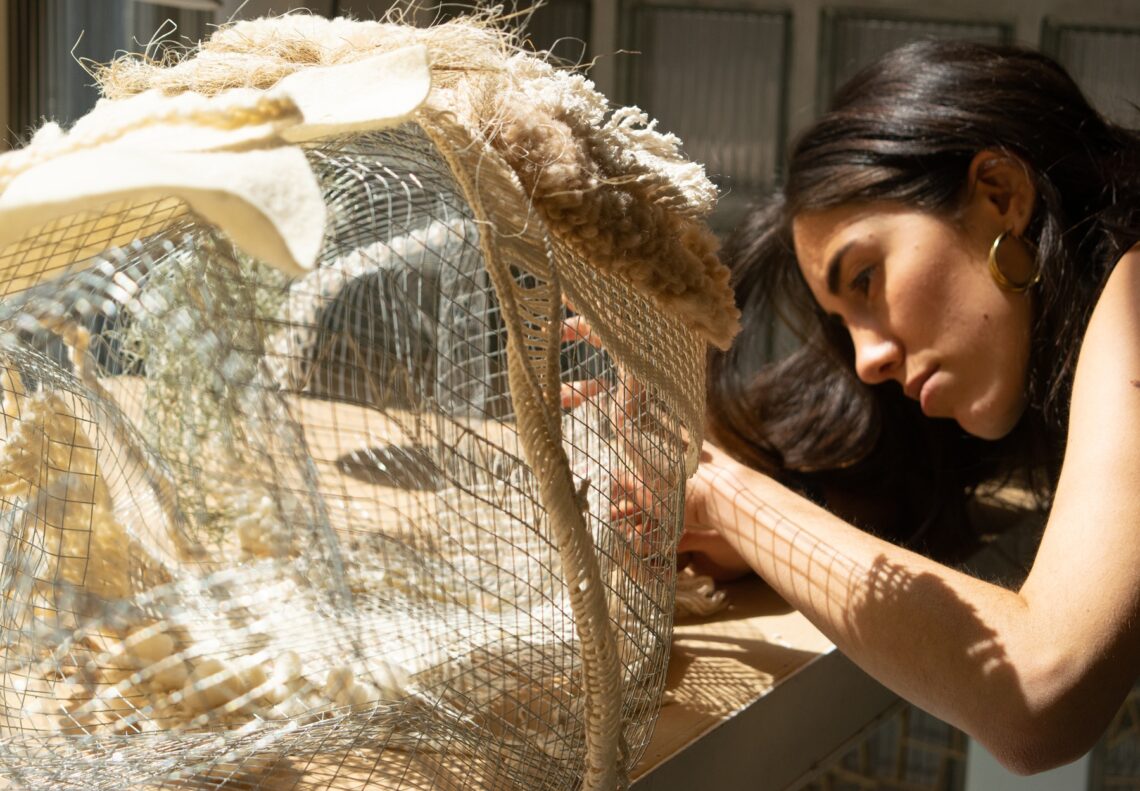
CLIZIA MORADEI. THE INTERSPECIES PARADIGM: TOWARDS A NEW ECOLOGY OF DESIGN
| by Susanna Cati |
Clizia Moradei is a design researcher at Iuav University of Venice, where she earned her PhD in 2025 within the University’s interdisciplinary doctoral programme dedicated to sustainabilityoriented design. In the same year, she was awarded the Stockholm Prize for Sustainable Fashion Design, a distinction recognizing her contribution to research and innovation in the field. Her scholarly work focuses on the intersection of fashion, product design, and the visual arts, with particular emphasis on the development of sustainability-oriented design practices. Central to her research are naturally derived materials and the dialogue between industrial
production and artisanal craftsmanship, both of which she considers fundamental to rethinking contemporary creative and manufacturing processes. Moradei’s approach brings together design methodologies, fashion studies, critical design, neomaterialist theory, and ecological principles, offering an interdisciplinary perspective aimed at fostering more responsible and innovative models of design.
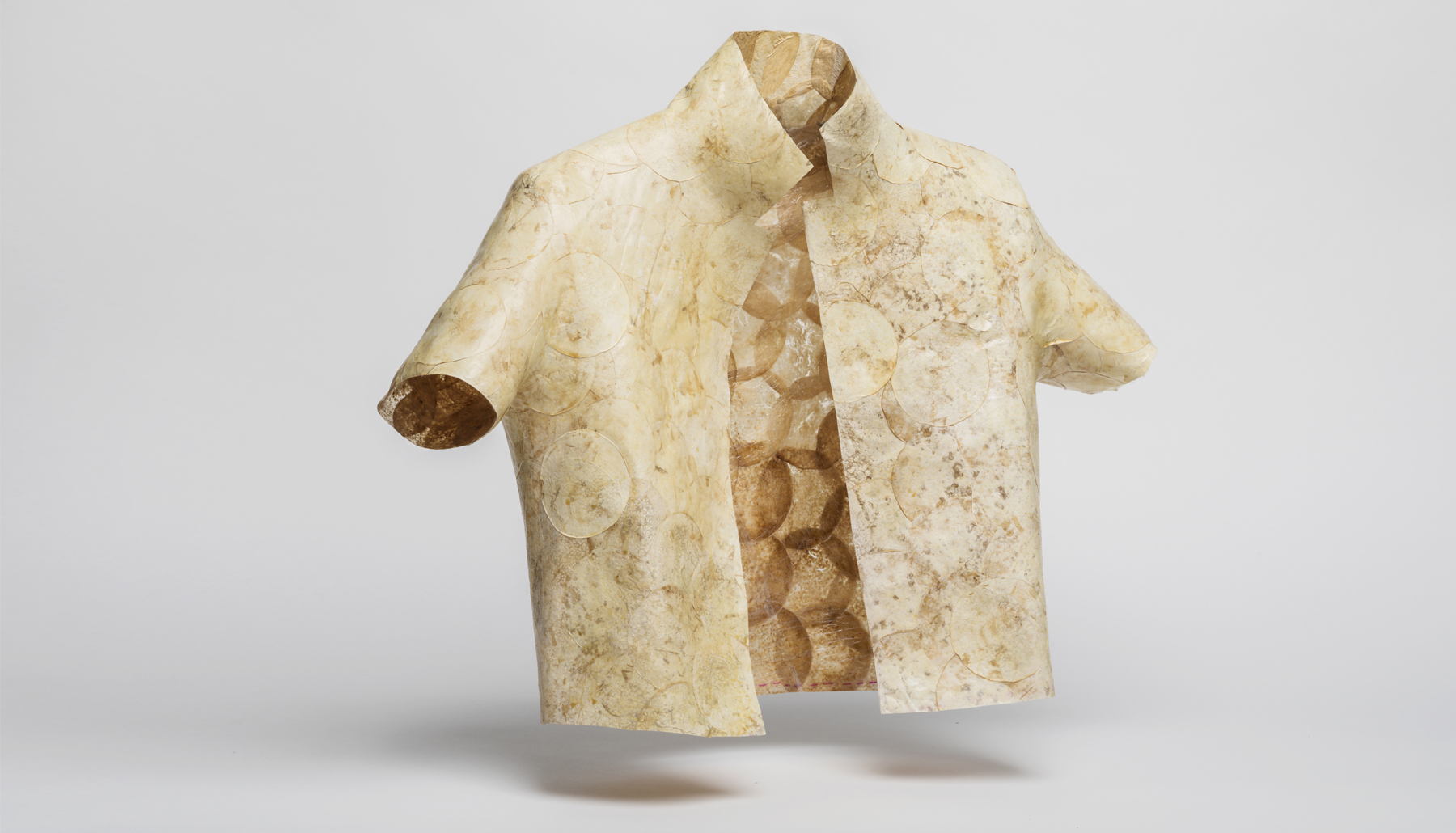
I first encountered Clizia Moradei’s work through her book Moda interspecie. Funghi e pratiche di reincanto (Interspecies fashion. Fungi and practices of re-enchantment), which offers an innovative reflection on the relationship between fashion, nature, and design. The book takes readers on a research journey into the “underground” of fashion, bringing to light new perspectives that have the potential to transform the way we conceive design through a dialogue with the fungal world.
The book begins with the growing interest that has surrounded fungi over the past decade. Fungi have become the protagonists of a cultural phenomenon extending far beyond the boundaries of biology and influencing disciplines such as art, design, and fashion. Organisms long regarded as marginal have thus assumed a central role, offering new models of relationships and new ways of approaching design. Through the concept of the interspecies paradigm, Moradei invites us to rethink the role of the designer, proposing an approach inspired by the complexity, regenerative capacity, and ecological intelligence of fungi. What emerges is a more conscious and sustainable vision of fashion, in which design is no longer understood as the mere production of objects, but as a relational practice capable of establishing a dialogue with living ecosystems and generating new forms of creativity and responsibility.
FULL ARTICLE IS INCLUDED IN ATLAS – CHAPTER TWO, AVAILABLE FOR PURCHASE AT WWW.AL3VIEATC.COM/SHOP/ATLAS-CHAPTER TWO/ OR BY CLICKING ON THE COVER